Caesars floats offer to buy William Hill, MLB needs fans at games in 2021, Allbirds closes a $100 million round of funding, and personal trainers have had a tough year.
|
|
|

|
Gary A. Vasquez-USA TODAY NETWORK
|
A blockbuster sports betting deal could be in the works as Caesars Entertainment has made a $3.7 billion offer to take over U.K.-based William Hill. Caesars currently owns 20% of the two companies’ joint U.S. venture.
At the price offered, William Hill’s board of directors said “they would be minded to recommend” the deal to shareholders. The acquisition likely wouldn’t close until the second half of next year, but William Hill’s shares dropped 12.43% since market close Friday.
William Hill’s online wagering technology, which includes sports betting and virtual casino games, has stayed strong despite European storefronts closing during the pandemic. Caesars’ main goal is to keep William Hill’s U.S. assets and betting technology, but it could sell its international operations.
Projected Share of $18 Billion U.S. Sports Betting Market in 2025:
28% — Flutter Entertainment, owners of FoxBet and FanDuel
20% — DraftKings
12% — Caesars
|
|
|
|

|
Wendell Cruz-USA TODAY Sports
|
With a shortened, fanless season in the books, MLB Commissioner Rob Manfred said a full schedule without fans next year would be “economically devastating.” Approximately 40% of baseball’s annual revenue is from in-stadium activities, resulting in a loss of $3 billion during the two-month season.
Across a full 162-game season next year, MLB would lose exponentially more than that, Manfred said. The expanded 16-team postseason will help — potentially generating more than $200 million from additional games — but Manfred stressed the importance of figuring out a way to have fans in the stands.
Despite baseball’s bubble concerns for next season, the NHL could return to the format — at least for a little while. While NHLPA Executive Director Donald Fehr said a full bubble season won’t fly, a hybrid system could be used to start next season, which could begin as early as December.
|
|
|
|

Sustainable sneaker maker Allbirds closed a $100 million Series E funding round last week. Franklin Templeton led the new round and was joined by T. Rowe Price, Baillie Gifford, TDM Growth Partners and Rockefeller Capital Management.
The company — founded in 2016 — is now valued at $1.7 billion, just above its $1.4 billion valuation two years ago. Trendy with tech professionals in Silicon Valley, Allbirds also raised $27 million earlier this year in a Series D round that ended early because of the pandemic. To date, the company has raised more than $200 million.
Allbirds, which released its first running shoe earlier this year, announced a partnership with Adidas in May to produce a sports performance shoe with “the lowest ever carbon footprint.” Sneakers are hot, with retail platform Goat Group recently closing a similar investment round with a valuation of $1.75 billion.
Allbirds by the Numbers:
$95 — Price of its flagship Wool Runner shoe.
17,000 — Downloads within 24 hours of its new app launching last week.
21 — Allbirds brick-and-mortar stores with plans to scale up.
|
|
|
|
|
Max Gersh-Memphis Commercial Appeal via Imagn
|
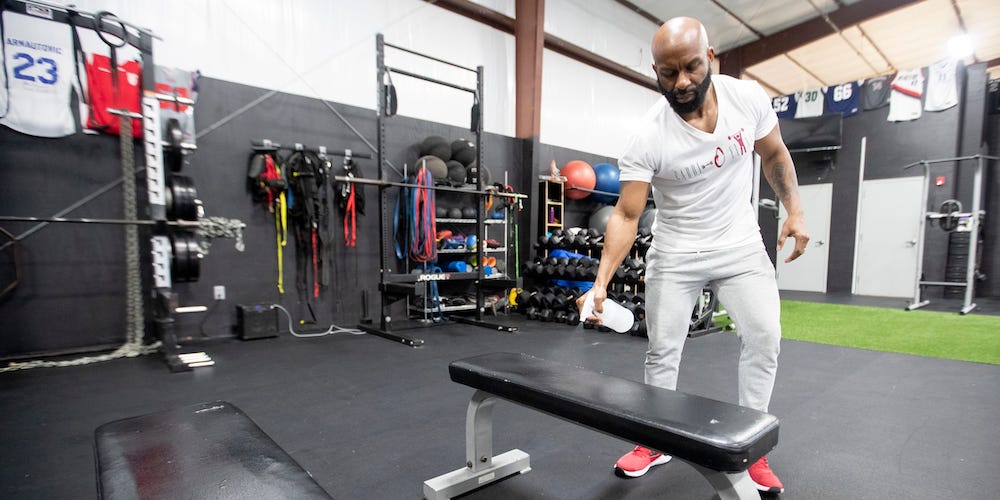
Gyms are struggling and so are personal trainers. A new survey found that 58% of personal trainers have lost some or all of their income since the pandemic hit. On the bright side, 21% of trainers — largely focused online — have made more money.
The findings shouldn’t come as a surprise as gyms have struggled to keep patrons, with 59% of Americans saying they would not renew their gym memberships even after the pandemic is over, per TD Ameritrade. Since May, multiple gym chains — and countless boutique studios — have filed for bankruptcy, including Gold’s Gym, 24 Hour Fitness and Town Sports International.
As gyms stay mostly empty, connected fitness and at-home equipment is growing quickly — punctuated by Apple announcing its own upcoming digital fitness service. Earlier this month, Peloton reported a 172% year-over-year quarterly revenue growth, while companies like Zwift and Tonal have received $450 million and $110 million, respectively, in new investment rounds.
Personal Struggles:
58% of personal trainers have lost some or all of their income.
23% of trainers were laid off or furloughed.
6% have yet to find new jobs.
97% plan to continue training clients after restrictions end.
|
|
|
|
|
Do you own a pair of sustainable sneakers?
|
|
Monday’s Response
35% of respondents have flown in the past six months.
|
|
|