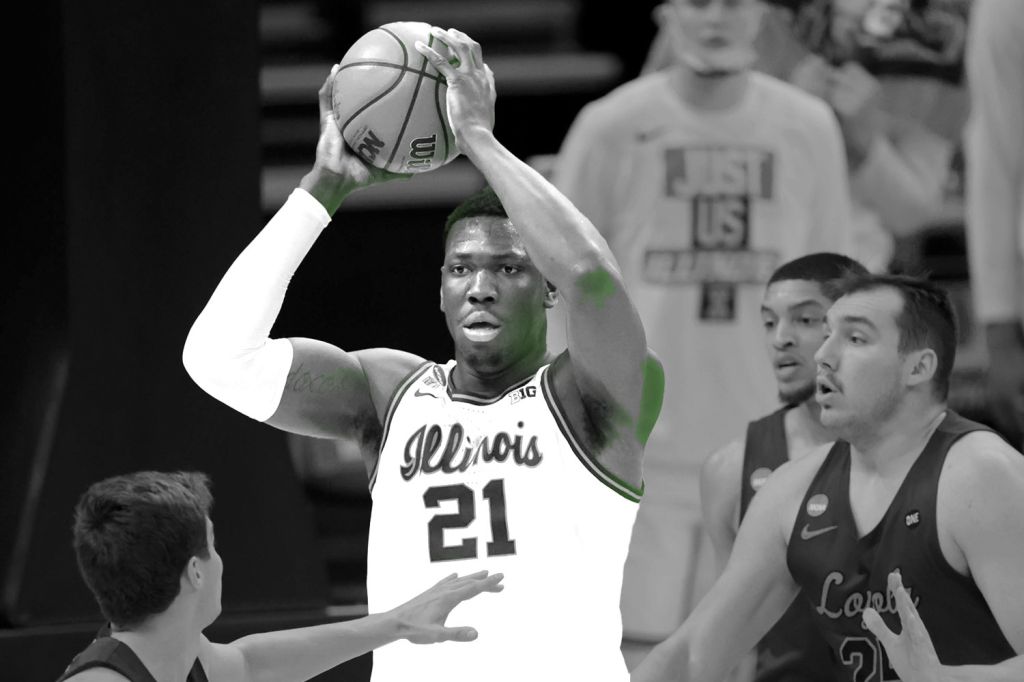
The NCAA suspended Illinois star Kofi Cockburn for three games because he technically profited off NIL before July 1 — even though he had declared for the draft at the time. The decision shows how the governing body is attempting to exercise control over athletes as it continues to lose power.
– Amanda Christovich
|
|
|
|
Photo: IndyStar-USA TODAY/Design: John Regula
|
|
The NCAA finally allows NIL. But that didn’t stop the governing body from finding a retroactive loophole to punish an athlete for profiting off it.
On Monday, Illinois men’s basketball announced the NCAA had suspended center Kofi Cockburn three games for profiting off his NIL in June — one month before NIL rules took effect. Cockburn also has to give the earnings to charity.
The NCAA waited until a week before tip-off to exert whatever power it has left over the star of a ranked team. “It wants to show it is still relevant and in charge,” athlete advocate and sports lawyer Jaime Miettinen told FOS.
To do that, the NCAA got him on a technicality:
- In mid-April, Cockburn declared for the NBA Draft but opted to keep his NCAA eligibility.
- In June, Cockburn sold some of his Illinois-issued apparel through a popular site called The Players Trunk. (The Players Trunk did not respond to an interview request.)
- Because the merchandise has Cockburn’s name on it, he technically made money off his NIL — but he wasn’t violating any rules at that time, since he planned to enter the draft.
On July 16, after the merchandise had already been sold, Cockburn announced he had decided to return to Illinois.
“Once Kofi had a full understanding of where he stood regarding the draft, he made an educated decision to return to school, work toward his degree, and continue improving his game,” Illinois coach Brad Underwood said in a statement.
|
|
|
|
|
Kirby Lee-USA TODAY Sports/Design: Alex Brooks
|
|
Despite not breaking any laws or engaging in pay for play, Cockburn is now the first athlete to be punished for NIL activities during the NIL era.
The NCAA’s indictment follows a historic pattern: It investigates and dishes out punishments for even the most minor eligibility infractions.
“While the NCAA did not have to punish him, it may have chosen to act for a couple reasons: for consistency’s sake … and for control,” Miettinen said.
But suspending Cockburn could be the NCAA’s last hurrah as decades of power over athletes slip away.
- The Alston decision exposed the NCAA to further lawsuits if it imposes strict rules on athlete compensation, including NIL.
- As a result, the NCAA couldn’t publish detailed NIL rules, so individual schools or states now govern the industry.
- Since the NCAA couldn’t write rules about current NIL deals, it doesn’t have grounds to punish them.
The NCAA could continue investigating athletes who may have engaged in NIL before July 1 if it wants to — since that’s all it has.
Even that is a grey area now, though. Cockburn profited long after both school and NCAA officials had agreed NIL is an athlete’s economic right.
Miettinen doesn’t expect the NCAA to keep punishing retroactive NIL violations, though. She thinks Cockburn was an exception used to serve the NCAA’s own purposes.
“Unfortunately for Cockburn, being a hugely popular and talented athlete may have placed a target on his back,” Miettinen said.
|
|
|
|
- Conference USA has invited Jacksonville State, Liberty, New Mexico State, and Sam Houston to join the conference, according to Yahoo Sports.
- AAC Associate Commissioner for Basketball Brian Thornton will be the WAC’s next commissioner, the conference announced.
- After College Football Playoff expansion meetings, executive director Bill Hancock told ESPN that eight or 12 team-models are under consideration — but that officials are still deliberating.
|
|
|
In the past year or so, the NCAA has doled out more punishments for athletes unknowingly accepting money for dorm room phone jacks or selling memorabilia during draft exploration than it has for coaches covering up sexual assault or driving drunk.
Clearly, suspending Kofi Cockburn shows the NCAA’s misguided priorities. The governing body seems more interested in investigating “infractions” the general public sees as acceptable than actual crimes.
No wonder the process has been widely criticized — even by the NCAA’s own membership.
Tips? Comments? Reach out to Amanda Christovich at amanda@fos.company or on Twitter.
|
|
|