A new federal bill could make it much harder for teams to pack up and leave town. It could also complicate the Bears’ potential move from Chicago to Indiana.
Netflix swung for the fences in its first MLB broadcast, but viewers noticed glitches, missed game moments, and a heavy dose of self-promotion. Read the story.
Tiger Woods popped up in the TGL Finals at just the right time, as the league heads into media-rights talks and boosts its value. Read the story.
Several NFL TV jobs are open, but the QBs best suited for them (see Matthew Stafford and Aaron Rodgers) are still on the field—for now. Read the story.
Max Verstappen kicked a reporter out of a press conference ahead of the Japanese Grand Prix, the latest sign of his growing frustrations. Read the story.
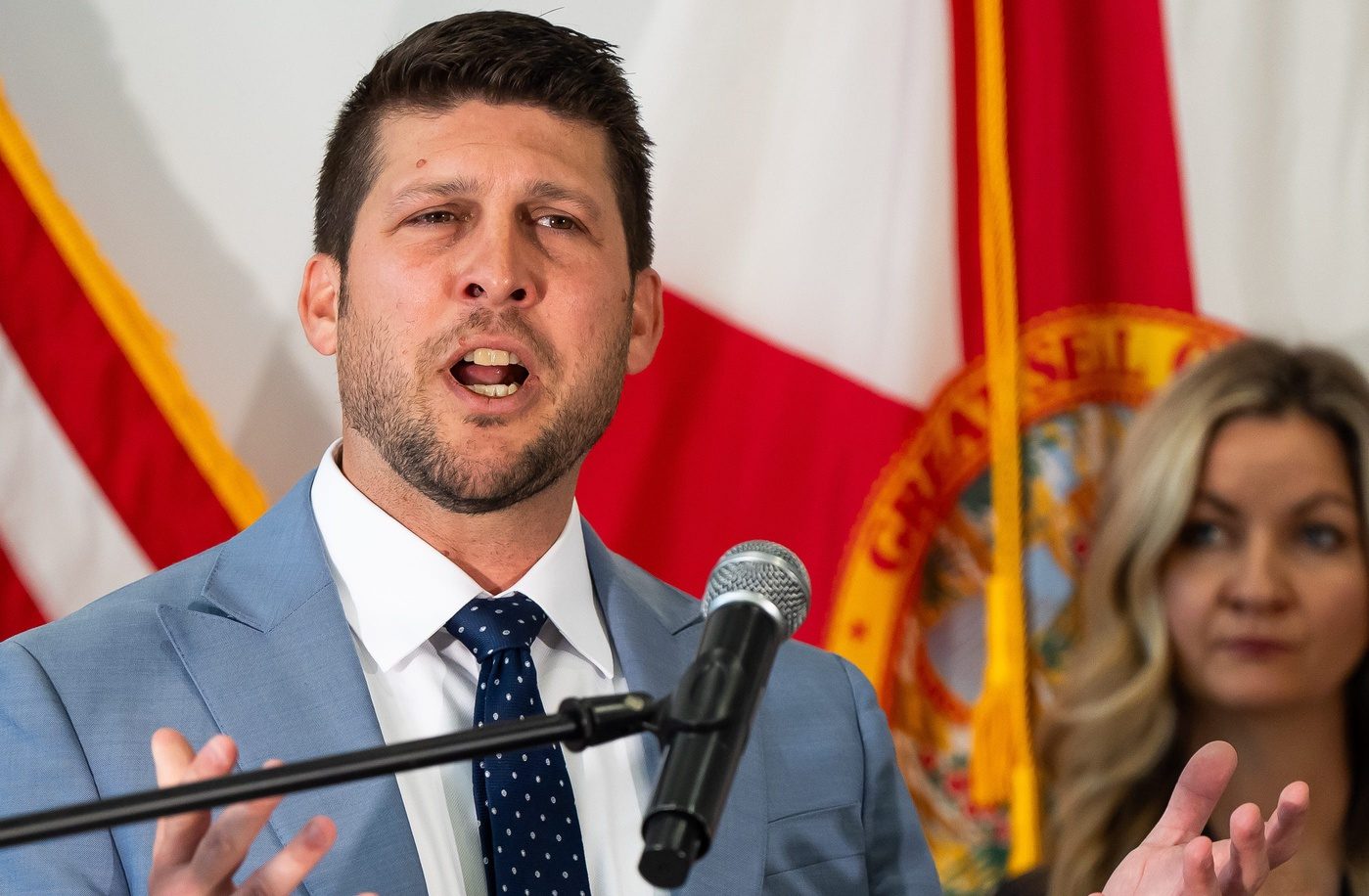
Two congressmen are introducing a bill Thursday that would essentially federalize Ohio’s Modell Law and impose a series of conditions before a pro team could move out of its existing metropolitan area.
The Home Team Act, proposed by Rep. Greg Casar (D., Texas) and Sen. Bernie Sanders (I., Vt.), would require pro team owners to give local communities a chance to buy the teams before relocating. Among the specific provisions in the bill:
Mandating that team owners give a minimum one-year notice before moving to a new community, defined as crossing state lines or moving to a new metropolitan statistical area.
Giving local communities an opportunity to buy the team at a “fair price,” including through models such as what the publicly owned Packers use.
Enforces penalties on non-compliant franchise owners, including fines of $30,000 per day.
Most immediately, the Home Team Act could stand in the way of a potential move by the Bears to Indiana if the bill passes. The NFL team is actively considering a shift across the state border to Hammond, Ind., and legislators there have already approved a funding mechanism to help build a domed stadium.
“As Bernie and I were talking about this, I lamented the loss of the Houston Oilers to Tennessee when I was a kid, and he was lamenting the loss of the Brooklyn Dodgers to California,” Casar tells Front Office Sports. “We’re looking to level the playing field for fans against team owners, and also for communities.”
While starting now as a Democratic initiative, Casar believes this will ultimately become a bipartisan effort, and he said there is already “significant interest” from the Illinois delegation because of the Bears’ situation.
“The American people are sick and tired of billionaires threatening to move the sports teams they own to different states unless they get hundreds of millions in corporate welfare to build new stadiums,” Sanders said in a statement.
Ken Blaze-Imagn Images
Parallels to Cleveland
The Home Team Act is influenced in part by Ohio’s Modell Law. That state-level provision requires a team using a tax-supported facility in the state to provide at least six months’ notice before leaving, as well as a franchise purchase opportunity for local entities.
The Modell Law came up last year in legal battles involving the Browns’ planned relocation from downtown Cleveland to suburban Brook Park, Ohio. The most recent Ohio budget, however, changed elements of the Modell Law to apply limitations on pro teams only if they intend to leave the state entirely, and it became moot regarding the Browns.
Still, that measure provides a key window into what could be emerging across the country.
“I was an Austin city councilman when this also came up regarding the Columbus Crew,” Casar said, referring to a thwarted move of the MLS club to Texas in 2018. “The Modell Law helped keep that soccer franchise there, we got an expansion club, and it was truly a win-win. So as the Modell Law was helpful there, we now need a solution like that nationwide.”
Congressional Multitasking
Like the approval of a boxing reform bill earlier this week in the U.S. House of Representatives, the introduction of the Home Team Act arrived amid deep political division on Capitol Hill and demands from other pressing issues. In particular, Democrats and Republicans are debating funding for the Department of Homeland Security, which in turn has helped create historically long security lines at many U.S. airports.
“We have to be able to walk and chew gum at the same time,” Casar said. “I’ve been very vocal about funding TSA, very vocal about reforming ICE, and very vocal about avoiding endless wars. We also want to keep the spotlight on protecting sports fans, and we’re going to do all of that.”
SPONSORED BY INVESCO QQQ
Innovation On and Off the Court
Rethink how you round up the GOATs of the Nasdaq-100 Index®. With Invesco QQQ ETF, you can harness the growth potential of groundbreaking companies across sectors including tech, healthcare, and more. An investment in Invesco QQQ is an investment in innovation. Access the future with Invesco QQQ.
That’s how much the Dallas Wings’ new practice facility is expected to cost, with the team now stepping in to lead construction.
After delays and a growing budget, the city has capped its funding—leaving the WNBA team to cover the remaining costs as they build toward a full move to Dallas. Read the story.
LOUD AND CLEAR
Rooney Rule Debate
Doug Engle-Florida Times-Union-Imagn Images
“NFL teams and their fans don’t care about the race of the coaching staff.”
—Florida Attorney General James Uthmeier, calling for the NFL to suspend the Rooney Rule and threatening potential legal action if the league does not comply. Uthmeier argues the rule violates state law by requiring race-based interview considerations. The Rooney Rule, created in 2003, requires teams to interview minority candidates for head coaching, general manager, and other senior roles as part of the hiring process.
Supporters, including the Fritz Pollard Alliance, say the rule “doesn’t limit opportunity; it expands it,” emphasizing that it’s meant to widen candidate pools—not dictate hiring decisions. Read the story.
SPONSORED BY INVESCO QQQ
Veteran Coaches Are Thriving Under NIL
Despite radical shifts from NIL and the transfer portal, veteran coaches continue to dominate the postseason. While some legends retired to avoid the “pro era” of college sports, stalwarts like Rick Barnes and Tom Izzo have successfully adapted. Their presence in the 2026 Sweet 16 proves that experienced leadership remains a vital asset in a changing landscape.
These veterans thrive by embracing their roles as “stewards of the game” and leveraging deep donor bases to meet soaring NIL costs. As top-tier roster demands reach $10 million, the financial barrier is hindering Cinderella runs for smaller schools. However, Hall of Fame coaches who embrace this new business model demonstrate that established programs can still flourish.
Shohei Ohtani ⬆The Dodgers superstar led MLB’s Opening Day list of the most popular player jerseys for the third straight year. Ohtani is one of four Dodgers players in the top seven of rankings of sales from the Fanatics network of sites, including MLBShop.com, since the end of the World Series, joining Yoshinobu Yamamoto (No. 2), Mookie Betts (No. 5), and Freddie Freeman (No. 7). Yankees superstar Aaron Judge ranked No. 3. The presence of Yamamoto in the No. 2 slot marked the first time that two Japanese-born players topped this list to enter a season.
Broncos ⬆The NFL team has agreed on a $45.8 million deal with the Colorado Department of Transportation to buy the 58.5-acre Burnham Yard parcel thatwill be the site of a new stadium. That land deal is set to close by May 15, continuing efforts to open the new facility in 2031.
Masters attendees ⬇The free public parking lots outside Augusta National Golf Club will not open before 6 a.m. ET during next month’s tournament. Previously, many Masters patrons would arrive in the wee hours of the morning to get a prime parking spot before gates opened at 7 a.m. The parking lots this year will be closed to all vehicle and foot traffic between 10 p.m. and 6 a.m., city officials have announced.
*NOT FDIC INSURED | MAY LOSE VALUE | NO BANK GUARANTEE
There are risks involved with investing in ETFs, including possible loss of money. ETFs are subject to risks similar to those of stocks. Investments focus on a particular sector such as technology, are subject to greater risks, and are more greatly impacted by market volatility than more diversified investments. The Fund is non-diversified and may experience greater volatility than a more diversified investment. The risks of investing in securities of foreign issuers can include fluctuations in foreign currencies, political and economic instability, and foreign taxation issues.
The Nasdaq-100 Index® includes the 100 largest non-financial companies listed on the Nasdaq. An investment cannot be made directly into an index.
This does not constitute a recommendation of any investment strategy or product for a particular investor. Investors should consult a financial professional before making any investment decisions.
Before investing, consider the Fund’s investment objectives, risks, charges, and expenses. Visit invesco.com for a prospectus with this information. Read it carefully before investing.