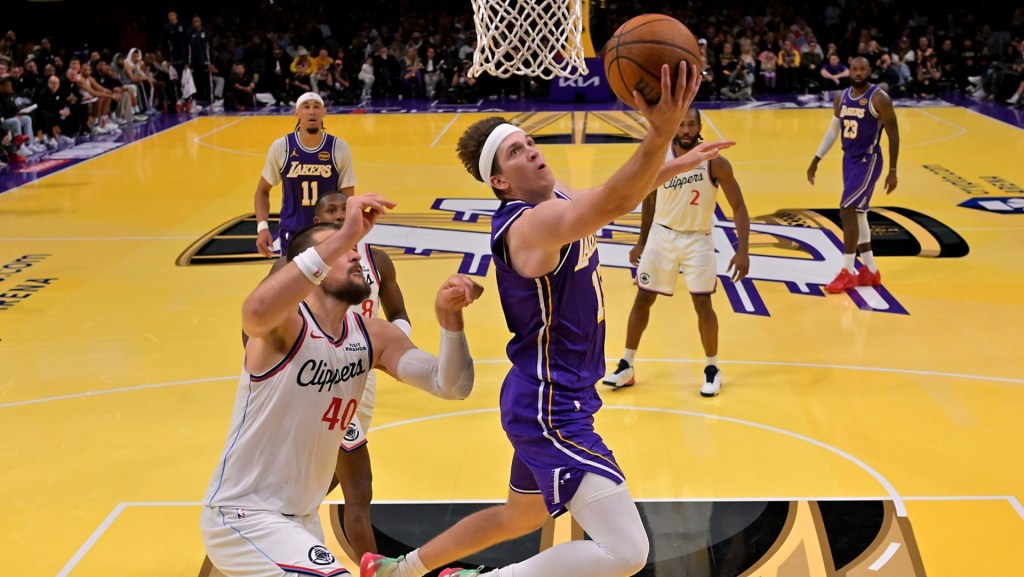
On the eve of the House v. NCAA settlement’s approval last year, college sports administrators predicted the revenue-sharing era could change the power dynamics in college basketball.
Revenue sharing would be capped at $20.5 million per athletic department, and schools with FBS football were expected to offer 75% of that money to football, with the rest being split between men’s and women’s basketball and any other sports that schools wanted to fund. But for the schools without football to share that money with—especially those in the Big East Conference—they could spend way more on men’s basketball, and potentially reassert their dominance.
That advantage never materialized, however. Of the top basketball-only conferences, the Big East is projected to send only three teams to the tournament; the West Coast Conference also has three teams projected, and the Atlantic 10 has two. Meanwhile, of the Power 4, the Big Ten and SEC are both projected to send 10; the ACC and Big 12 are both projected to send eight.
Administrators who spoke with Front Office Sports pointed to two dynamics that have allowed the power conferences to continue to dominate, even though they’ve shared most of their revenue-sharing money with football. The reason: The settlement hasn’t actually implemented the salary cap it was billed to.
“It remains to be seen how much of a quote advantage a league like ours is going to have,” Big East commissioner Val Ackerman told FOS this week. “Because as long as these third-party payments can continue, and as long as they can be cleared by the College Sports Commission … whatever advantage people think we have is maybe not as strong of one as they might think.”
The Frontloading Loophole
If the House v. NCAA settlement rules had been implemented the way many administrators expected, schools that spent $15 million on football would only have $5.5 million left for the rest of their schools, plus some supplemental NIL dollars.
But the basketball rosters appearing in men’s March Madness this year weren’t beholden to that cap. Players were recruited—and contracts were signed and executed—before the settlement itself was approved and the rules took place. Instead, they were created through a dynamic informally dubbed “frontloading.”
Throughout the spring, schools assumed the House settlement rules were coming. Though they could overdirect revenue sharing, they would also have to navigate new NIL restrictions: All Division I athletes would have to submit deals more than $600 to a software called NIL Go for scrutiny to ensure the deals represented fair-market value for a valid business purpose, rather than pay-for-play or revenue-sharing supplementation in disguise. In other words, collectives and donors could no longer offer vast sums for one measly Instagram post and call it “NIL.”
The settlement didn’t end up getting approved until June 7. So players wouldn’t have to report any deals that were signed before NIL Go took effect (which took place June 11), and were fully paid out before July 1—when settlement rules took effect. That gave schools months between the basketball portal opening—when schools renegotiated with players—and the settlement to not only prepare revenue-sharing contracts, but fully execute and “frontload” additional NIL compensation. As far as the College Sports Commission (the enforcement entity using NIL Go) was concerned, their jurisdiction did not begin before June 7—so frontloading was perfectly legal.
Everyone frontloaded, whether they needed to to get around the cap to fund basketball or not. The barrier to entry among power conference and Big East programs to be successful this year is about $8 million to $10 million, two industry sources told FOS.
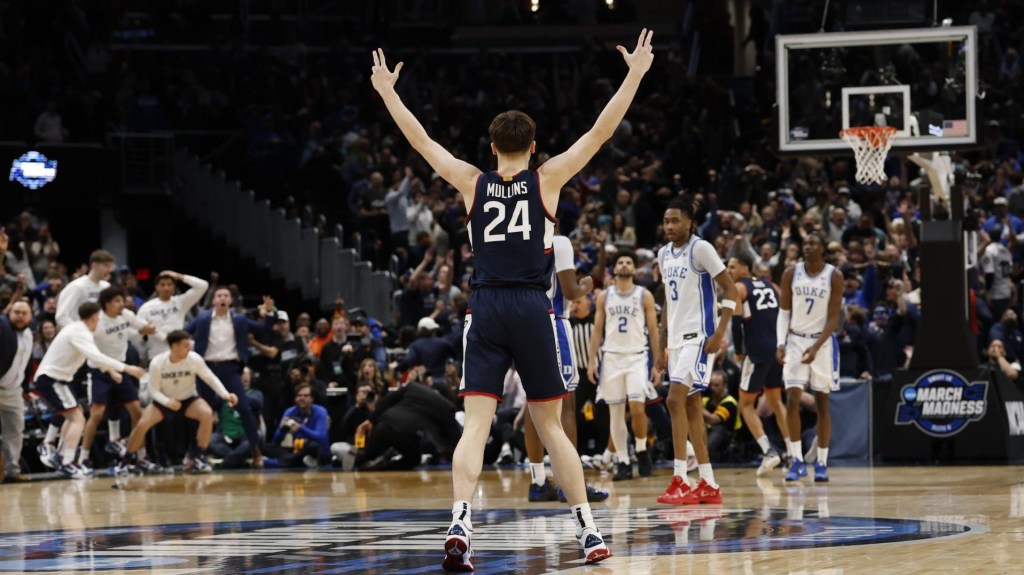
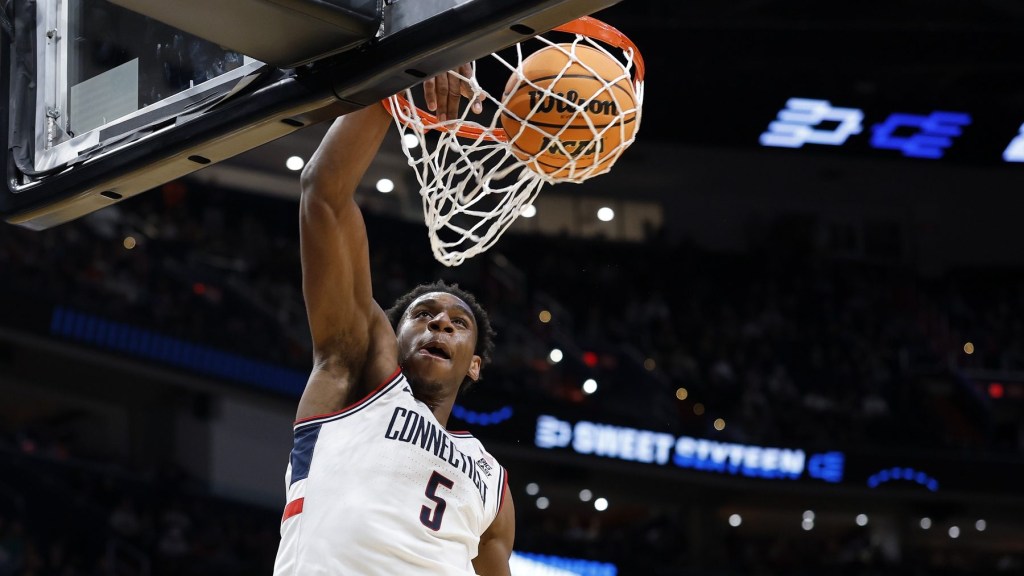
This past year, St. John’s offered a combination of NIL and revenue-sharing dollars at about $10 million for its men’s basketball program, athletic director Ed Kull confirmed to FOS. Villanova, another Big East program expected to make the tournament this year, was in the same $8 million to $10 million range, a source familiar with the matter confirmed to FOS. (UConn has an independent FBS football program considered a non-power conference team.)
But the power conferences were right there with them. Rumors swirled that some programs, like Kentucky, have gone much further, with rosters in the $18 million to $20 million range. One of these two sources said that none of the power conference or Big East programs that spent between only $3 million and $5 million on rosters have been successful this season, as far as they knew.
Said one of the industry sources: “Kansas wasn’t gonna just sit back and say, ‘Oh, that’s nice for UConn.’”
Cap In Name Only
For next year’s rosters, there won’t be any frontloading; the basketball transfer portal opens in April, nine months after the House settlement rules took effect. But the industry-wide consensus is that there still won’t be a “salary cap,” because schools have found ways of exceeding the cap using third-party NIL deals that are withstanding scrutiny by the College Sports Commission (the entity set up to enforce the House settlement).
To do so, they’ve enlisted what the CSC calls “associated entities” to facilitate deals on their behalf that can be considered part of a player’s overall compensation package. Associated entities include multimedia rightsholders, NIL collectives and boosters, or the official apparel sponsors of a school. CSC CEO Bryan Seeley told reporters that those types of deals aren’t illegal, so long as they offer a specific amount of money in exchange for specific NIL activities representing a company entity or with a valid business purpose.
“I’m not sure there’s any cap right now,” Villanova athletic director Eric Roedl told FOS. “The cap is really what resources schools can develop to spend.”
To be successful next year, competitive basketball programs in the power conferences or Big East may need to amass between $10 million and $12 million, the previous industry source estimated.
That doesn’t mean schools outside the power conferences will disappear—they just have to be well-resourced. At St. John’s this year, billionaire Mike Repole contributed a significant amount of money directly to the athletic department to be used as revenue-sharing dollars; his companies were also able to offer third-party NIL deals to players. And Kull described multiple other revenue streams to help keep player compensation funding up, from increasing ticket prices and looking for jersey patch sponsors to reorganizing donor incentives.
The other industry source, a collective head, said that basketball-only schools have expressed concern about being able to sustain the level of spending; power conference basketball programs with football, on the other hand, have not.
The bottom line: Schools aren’t worried about abiding by a cap. They’re only worried about ensuring their revenue streams don’t run out.