Matt Jones, Myron Medcalf Leaders to Replace Clinton Yates on ESPN Radio
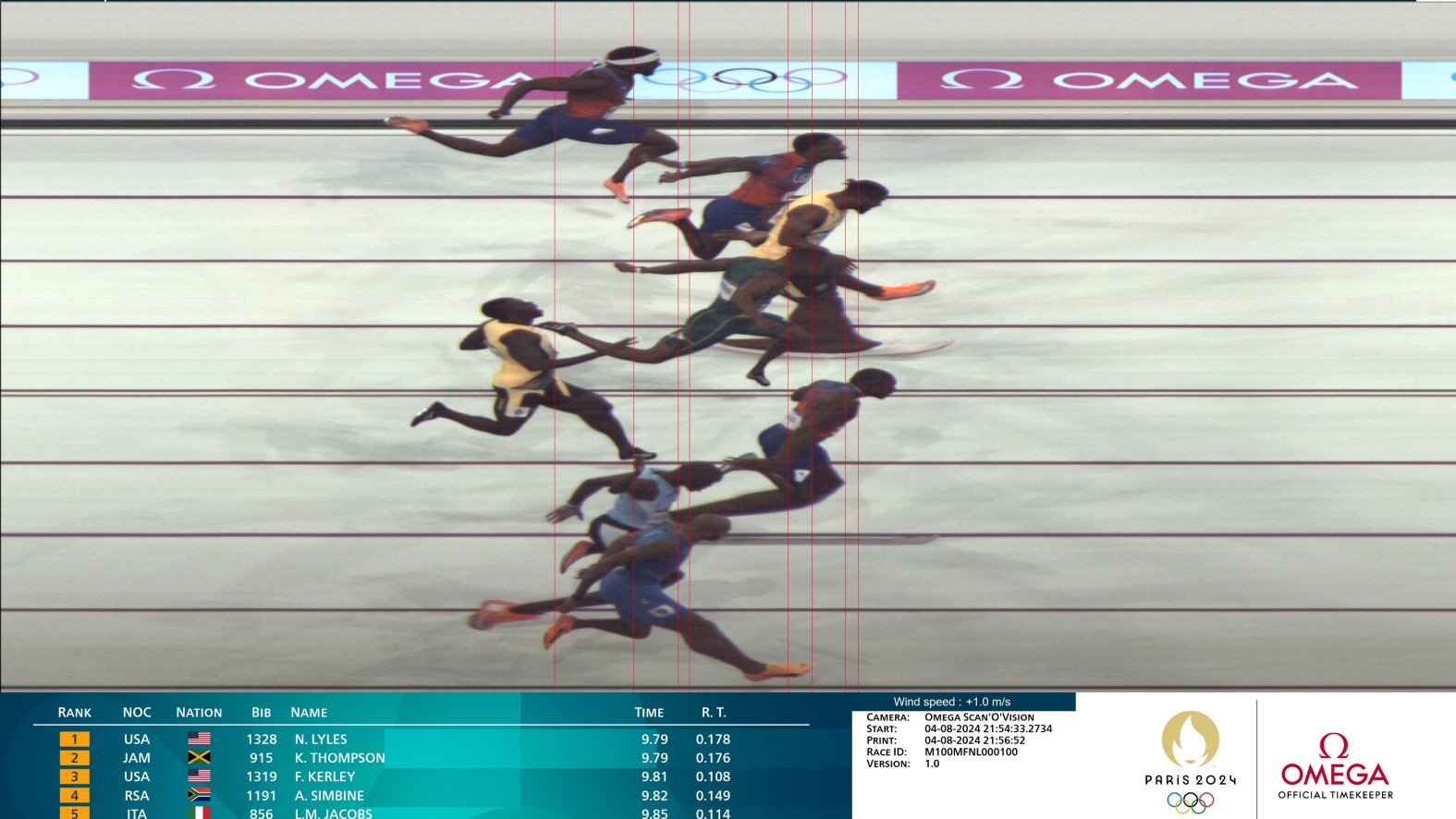
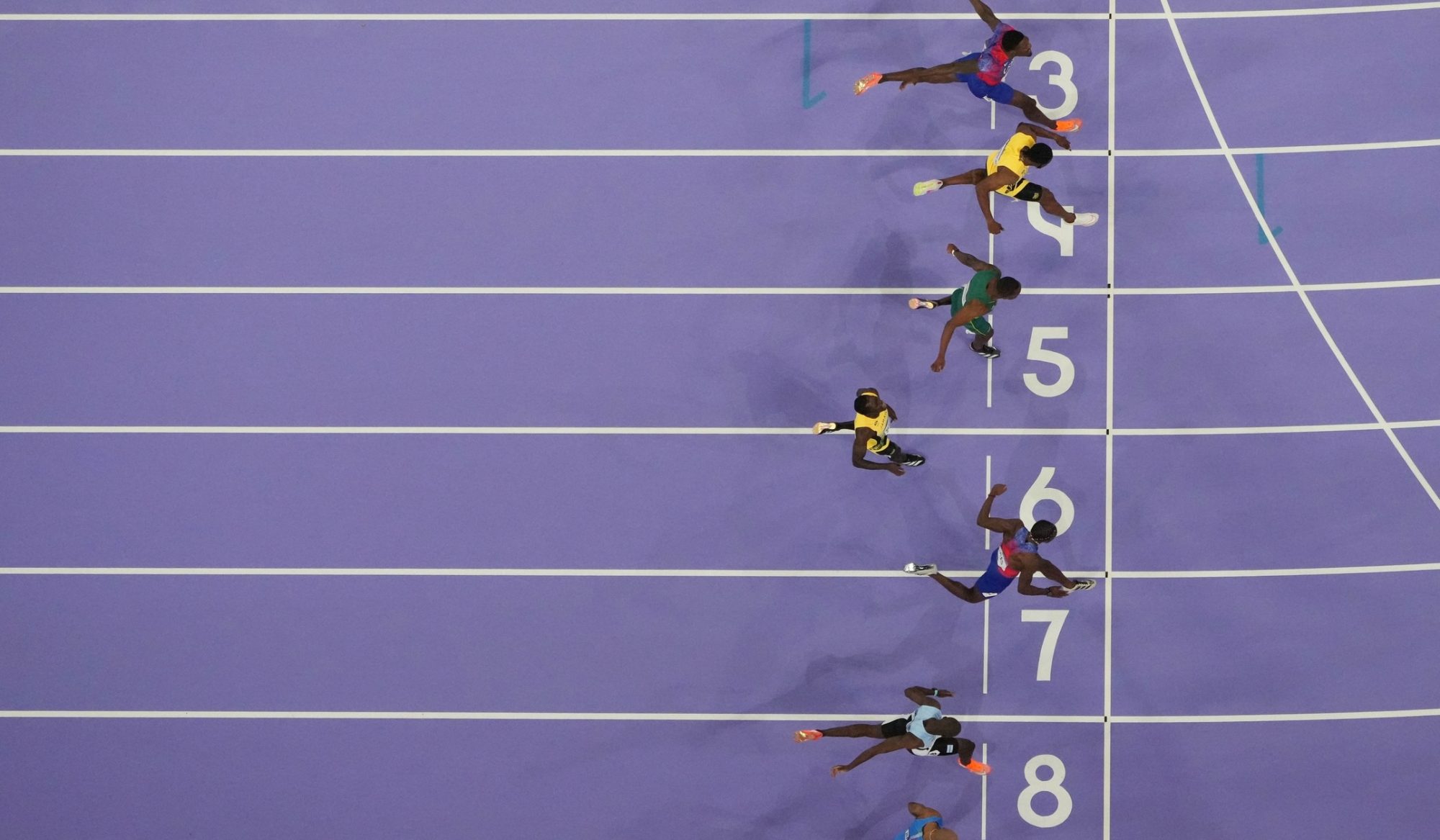
In the brief moments Sunday before American sprinter Noah Lyles was declared the Olympic 100-meter champion, the drama and confusion were distilled to five simple letters on the scoreboards at Stade de France: PHOTO.
For 28 agonizing seconds, Lyles, Jamaica’s Kishane Thompson, and millions of television viewers were not sure who won. At first NBC Sports had called the race for Thompson; even Lyles himself didn’t believe he crossed first, telling his rival, “I think you got the Olympics, dog.”
Meanwhile, behind the scenes, staffers of the official timekeeper of the Olympics shuffled through images from three angles to make sure the results were exactly correct. As audiences around the world waited, the scene cast a rare spotlight on the technology—and the nearly century-old partnership powering it—at the heart of these history-defining moments on the world’s biggest sporting stage.
Then, finally, the official declaration, accompanied by photographic evidence: Lyles had won by five-thousandths of a second, earning him a gold medal and the title of the fastest man alive. Omega had ruled it so.
As official timekeeper of the Olympics since 1932, and the Paralympics since 1992, the Swiss company oversees far more than the title suggests. Yes, its “Quantum Timer,” a modern stopwatch with a resolution of one-millionth of a second, forms the backbone of its sprawling Paris 2024 operation, for which some 550 Omega employees and 350 tons of Omega equipment were deployed in preparation.
But it was Omega’s “Scan ‘O’ Vision ULTIMATE,” a new model of finish-line cameras capable of snapping 40,000 images per second—four times faster than even the devices used three summers ago in Tokyo—that ultimately provided the visual evidence of Lyles edging out Thompson in the 100 meters.
The list goes on. Runners get set on Omega starting blocks with sensors that detect subtle changes in applied force—and, thus, false starts. They take off to the digitally replicated sound of an electronic starting pistol (known internally at the company as, simply, “the bang”) that blasts through Omega loudspeakers.
Then they race under the hawkish watch of Omega’s motion sensors and positioning systems that track their speeds, strides and other biomechanical data for broadcasters to relay to viewers. This was applied in spectacular fashion on Sunday with the 10-meter split times that showed Lyles trailing the entire race before edging out Thompson at the wire.
While the largest sub-squadron of Zobrist’s team in Paris (55 members) has been stationed at Stade de France, however, Omega’s influence extends far beyond the track and field competition. From scoreboards at all three dozen venues, to finish-line cameras for sports like sailing and cycling, to touchpads in the swimming pool and on the speed climbing wall, the company is responsible for logging and reporting the most basic yet critical pieces of information at the Olympics: Who wins, and by how much?
“Yeah, 350 tons is a lot of equipment,” Alain Zobrist, CEO of Omega Timing, the company’s sports division, tells Front Office Sports. “But we require that amount to measure every single result of every single athlete in every single sport at the Olympics, and then process that data and share it to global audiences.”
Speaking via Zoom from Paris last week, Zobrist noted that his team still had “a couple [electronic] frequency things to double-check with local authorities” at Stade de France, safeguarding against potential disaster in the middle of competition.
“In track and field, up to four backups run parallel, totally synchronized, so we can switch if needed,” Zobrist says. “We also run on independent power sources, and in case that fails, we can run on batteries. We’re not leaving anything aside, just to be ready for any kind of event.”
Omega has come a long way from its Olympic origins in 1932, for which a single watchmaker hauled 30 handheld chronographs from its headquarters in Bienne, Switzerland to Los Angeles. “There are two areas where we’re focusing our innovation,” explains Zobrist, who has worked for Omega for 25 years and run Omega Timing as its CEO for the past 10. “How we measure time, and the technologies that allow us to understand what happens through time.”
One example in the former area grew out of necessity: To prepare for the addition of speed climbing in Tokyo—only the second sport where athletes can stop the clock themselves, after swimming—the company had to re-tailor its touchpads. “We need to consider the element of water in swimming, so that’s why we’re using different technology,” Zobrist says. “Swimming touchpads have contact band sensors in the back, but that’s not the case for speed climbing.”
In the latter category, Omega has focused its efforts on building upon the motion sensors and positioning systems that it unveiled at the 2018 Winter Olympics in South Korea, feeding its data into sport-specific AI models that, in turn, spit out biometric tracking data that can be relayed to viewers. Examples include the RPM of a table tennis shot, or the launch angle of a javelin throw.
“The photo-finish camera is a pure timekeeping device, but obviously we do a lot more than just timekeeping,” Zobrist says. “It’s athlete tracking of performances, It’s data processing. It’s visualizing the data for broadcasts or other outputs.”
Still more evolutions followed naturally as the underlying technology progressed. Such is the case with the “Scan ‘O’ Vision ULTIMATE” camera. “The lens improved, and the hardware and software running it improved,” Zobrist explains. “It really increases the quality of the image and allows the judges to make the right calls a little faster in the case of close races.” Ditto for a switch made a dozen years ago, for the 2012 London Olympics, from an actual starting pistol to Omega’s electronic system.
“The primary reason was that athletes further away from the gun, especially in the 400-meter [with its staggered start] would hear it slightly later, because sound travels,” Zobrist says. “The second reason was that it became increasingly difficult to travel with modified powder guns through customs. Now? No problem.”