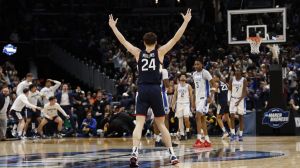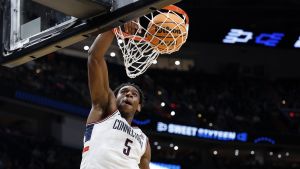
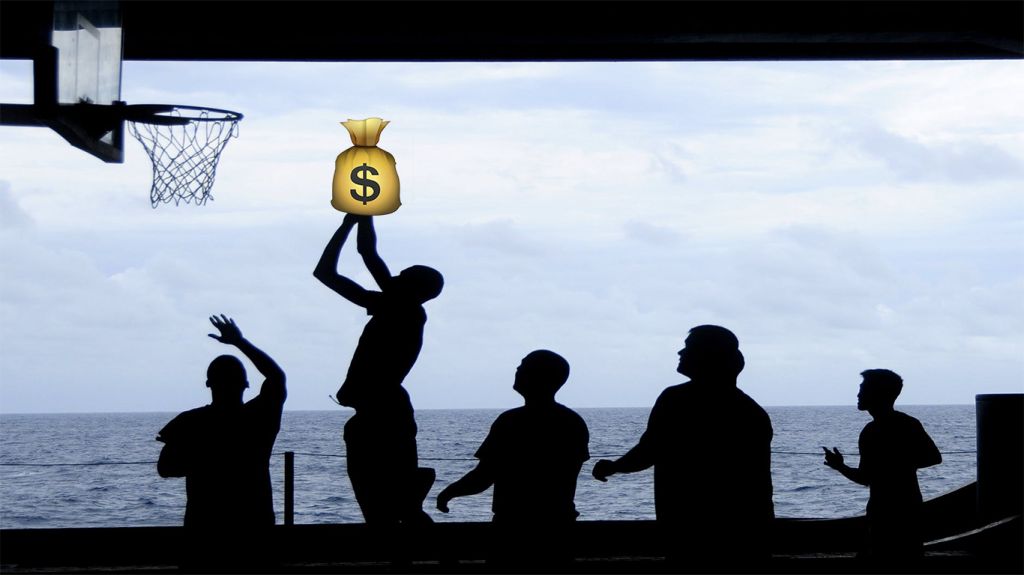
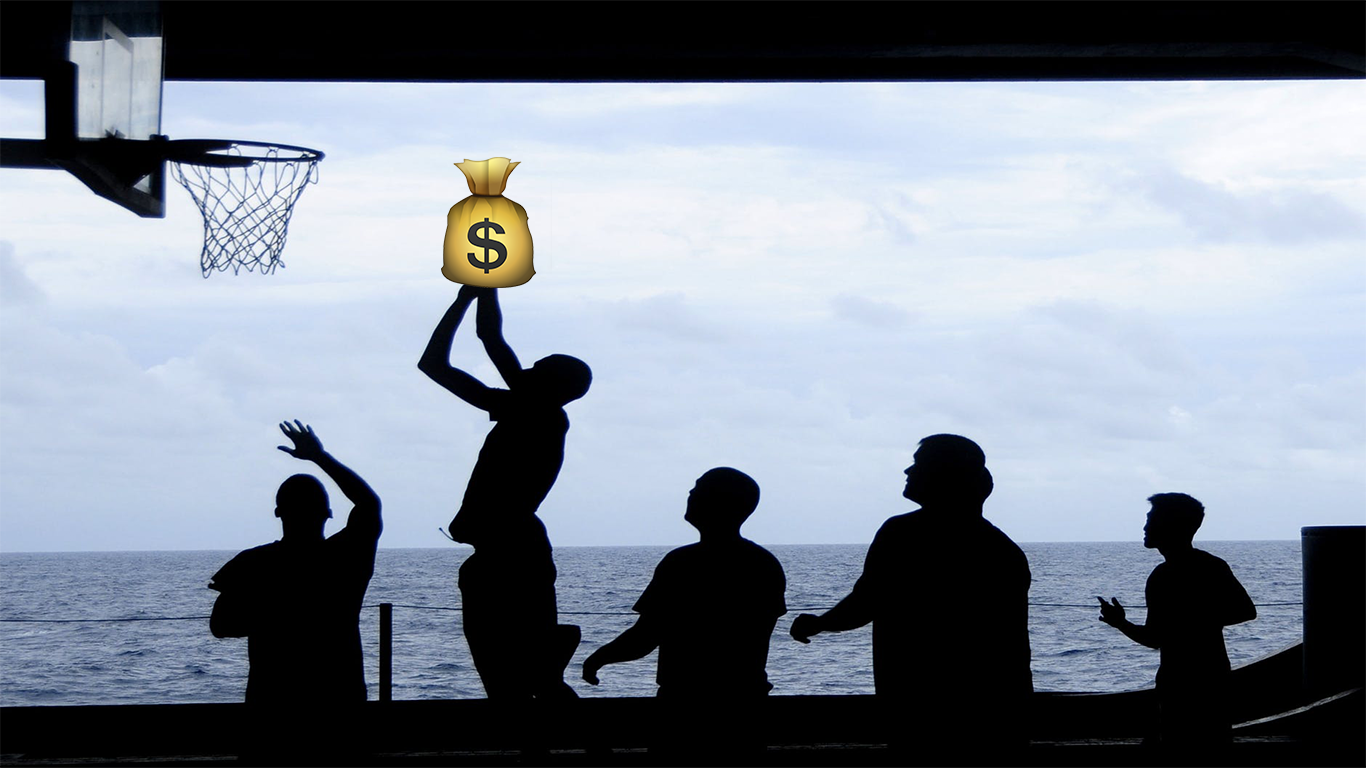
The debate over the NCAA and its power has only intesified. (Photo via Pexels)
Perhaps no sports organization has seen the changes that the NCAA has – originally formed to support and protect student-athletes in football, the NCAA now boasts over $1B in TV revenue.
Consider this quote from the late Professor Judson P. Welch, of Penn State University:
“I believe that the man who needs money to go through college should be allowed to play Summer ball, in just the same manner as he would do anything else for a living.”
These motives have drastically shifted in recent years, where the NCAA has amassed massive power – and participation by an athlete can determine whether or not they earn a spot in a professional league. As such, the NCAA now exerts monopsony power.
Similar to monopolies, monopsony power is characterized by markets in which one large buyer commands the entire market – in the NCAA’s case, young athletes supply their labor.
The NCAA forbids colleges from paying their athletes – effectively fixing prices. Here, the NCAA also acts as a cartel – a market in which competitors agree to fix their prices in the interest of generating monopoly (or monopsony) profits for all parties.
The NCAA’s Influence
In business, we have seen monopolies being toppled by competitors – traditionally via low-end disruption, where smaller, more agile competitors win through product innovations.
In basketball, we have seen evidence of this change – probably spurred by its large talent pool of players, spanning the entire globe.
This has led to many professional leagues across the world, which act as an alternative for high-end draft prospects, as well as a full-fledged development league for the NBA. In recent years, more athletes have been taking advantage of these opportunities – such as the Ball brothers in Vytautas in Lithuania.
Basketball’s international growth has also led to an influx of international scouts – who travel across the globe to watch young players in international professional leagues.
However, the NCAA maintains their outsize influence – largely due to brand and exposure; and for a labor market that is highly commoditized (i.e.: the bulk of athletes fall within the margin of error – meaning that the difference between being drafted and not being drafted can purely come down to luck), the extra visibility can be extremely valuable.
In other words – in exchange for working for free, athletes effectively invest in their future. Given that getting drafted into the NBA is a low probability event, it is likely that athletes experience increasing returns to scale simply by playing in the NCAA.
This leads to the vast majority of promising young athletes opting to play in the NCAA, rather than its competitors (from a labor perspective).
The current market, where there are many commoditized suppliers (athletes), and few buyers (the NCAA), can indeed change – and to date, there have been two legitimate competitors.
The NBA’s G League
The G League stands as a legitimate competitor to the NCAA, due to its affiliation with the NBA. And to be clear, it stands as perhaps the strongest alternative for high school athletes. Though player salaries are capped at $100K, the NBA’s orthogonal strategy, which only includes the G League, means that the G League has no intention of sustaining a standalone league.
In other words, due to the NBA’s core business being the NBA, the G League will continue to have a greater margin for error. Additionally, the influx of cash can come from alternative sources – a chief competitive advantage, relative to the NCAA.
On the other hand, the NBA differs from similar companies in other industries because its revenue in 2017 was only $7.37B (largely coming from the NBA, rather than its associated properties). While profits are not disclosed, we can safely assume that their size limits them from acting as a true orthogonal player – a notable example of this being Google, who famously lose money on many of their businesses.
Meaning – that there is a risk that the NBA does not have the capital to flesh out a true NCAA competitor, lest it grows at an unprecedented rate.
International Leagues
International leagues also stand as a legitimate option for high school players, since it offers both a high level of competition and high salaries. However, and even factoring in the progress in international scouting, there still exist large frictions on all sides.
Players will have to move to a new country at a young age, and more scouts will still be watching American games (greatly reducing the value of international leagues to the marginal player).
As such, international leagues, unless there is a greater talent boom internationally, forcing more scouts to watch international games, will stand as an option for high-profile prospects – rather than one for the common one.
Effects of Many Competitors
The ideal outcome is for there to be many competitors to the NCAA – which dilutes its influence. Inefficiency is an outcome of a monopsonistic market, and a greater number of competitors would nudge it towards efficiency.
As it stands, the NCAA still has a large influence – much of this being due to media attention and branding. However, for many years, its competitive advantage also included relatively greater scouting attention, a high level of competition, and access to world-class training facilities – all of which have been chipped at by their competitors.
We’re looking at a long-run outcome here, but there is a good chance that competitors will eventually arise, bringing efficiency to the market and reducing the NCAA’s influence.
Important to note: the NBA’s potential expansion into prospects may not result in a positive long-run outcome for athletes. Though on the demand side, the NBA faces competition from other leagues and sources of revenue, athletes may not fare as well – something we have seen play out in baseball.
Assuming that they act as a profit-maximizing firm, this would grow the NBA’s market power even further, which results in a similar outcome that we see in college basketball today – inefficiency, leading to a less-than-optimal situation for athletes alike.