Want more from Front Office Sports
in your search results?
The college sports world woke up on Friday morning to an industry on the verge of collapse.
The Pac-12 reportedly made a last-ditch effort to keep its member schools together with a flimsy-at-best television deal with Apple. It did so knowing it would lose UCLA, USC, and Colorado — and that healthier conferences with more money and stability were circling like vultures.
By the end of the day, the conference was dead.
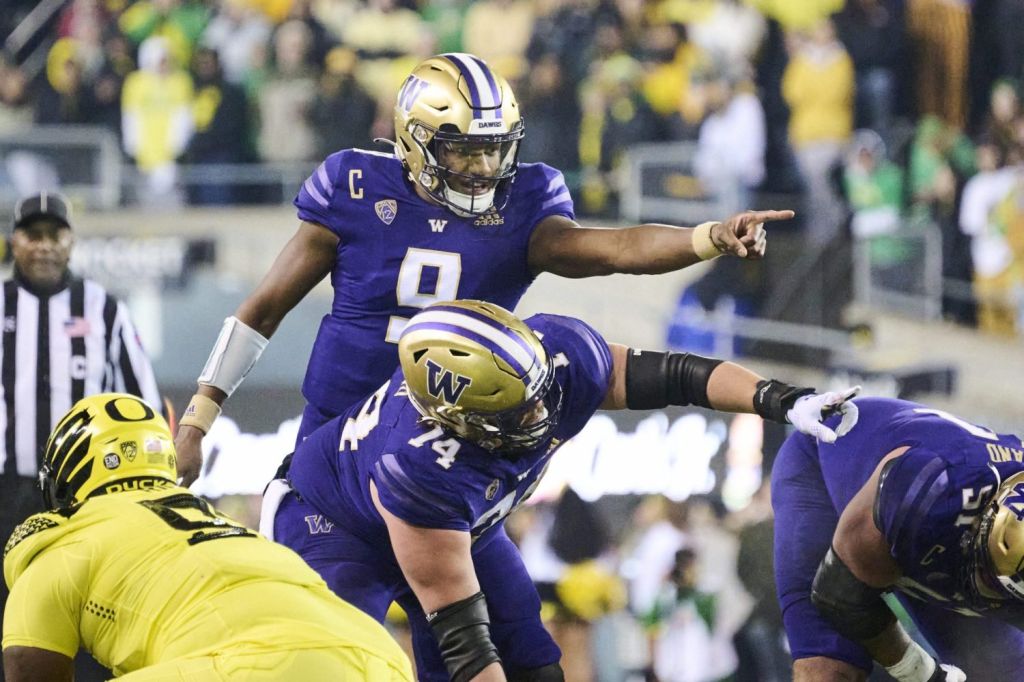
The Big Ten has rushed back into expansion conversations — and nabbed Washington and Oregon, who announced they would join the conference in 2024. Hours later, the Big 12 announced it would add Arizona, Arizona State, and Utah.
A few short decades ago, TV money built the Power 5 as we know it. But by the time college football season kicks off in a few weeks, the obsessive pursuit of TV money will have driven Power 5 schools to destroy the current system altogether.
“Conference realignment is driven by this continual chase of revenue,” Amy Perko, CEO of the college sports reform group the Knight Commission, told Front Office Sports. “The winners, at least in the media, are being defined as the conferences that bring in the most revenue.”
Creating a Monster
The modern-day NCAA is known for trying to control how much money athletes make. But 40 years ago, it also controlled how much money the conferences and schools made.
Up until the mid-1980s, the NCAA had sole ownership of college football television rights — which, at the time, were little more than one Saturday game a week on one network.
In 1981, the board of regents at the Universities of Oklahoma and Georgia challenged the NCAA’s football TV monopoly. The case went all the way to the Supreme Court, with justices ultimately ruling that the NCAA had committed a violation of the Sherman Antitrust Act by preventing schools and conferences from owning and negotiating their own TV contracts.
The decision created a legal pathway for the modern Power 5 — where the Big Ten, SEC, ACC, Pac-12, and Big 12 reigned supreme both from the championships they won and the money they made.
But it didn’t happen overnight.
The money really started flowing after 2007, when the Big Ten created the first conference-specific network. Soon after, the others followed.
“[That’s] the time period where you could look and say, ‘That’s when FBS conferences shifted and became more about the football TV market than their traditional conference composition,’” Perko said.
Over the past two decades, countless conference-realignment decisions have been made in the pursuit of football television dollars. Perhaps the biggest example: the breakup of the Big East in 2013.
The successful, basketball-centric conference almost ceased to exist when its FBS football-playing members decided to split off to create their own conference, now the modern day AAC. (The Big East has since rebuilt itself and created stability by avoiding the drama of football broadcast contracts altogether.)
By 2021, it looked like nothing could kill FBS — and specifically Power 5 — football.
Dozens of athletic departments were raking in more than $200 million in revenue, spending millions on lavish facilities and coaching contracts. Networks like ESPN and Fox were bidding higher than ever before. External changes — from name, image, and likeness laws to the financial losses of the COVID pandemic — didn’t kill it, either.
In his 1984 dissent of the Board of Regents decision, Justice Byron White (a Colorado football alum) wrote that the NCAA’s existence could be “threatened by unbridled competition in the economic sphere.”
While college administrators have used his line of thinking to claim athletes’ economic competition would kill college sports, it appears that their own economic ambitions could sink the system.
Powering Down
The most recent conference-realignment carousel began in 2021 with Texas and Oklahoma announcing they would leave the Big 12 for the SEC.
But while there have been multiple moves — from the Big 12 picking up four schools to USC and UCLA agreeing to join the Big Ten — the Power 5 structure has never been more threatened than this week.
The reason for this instability, as usual, is a television deal.
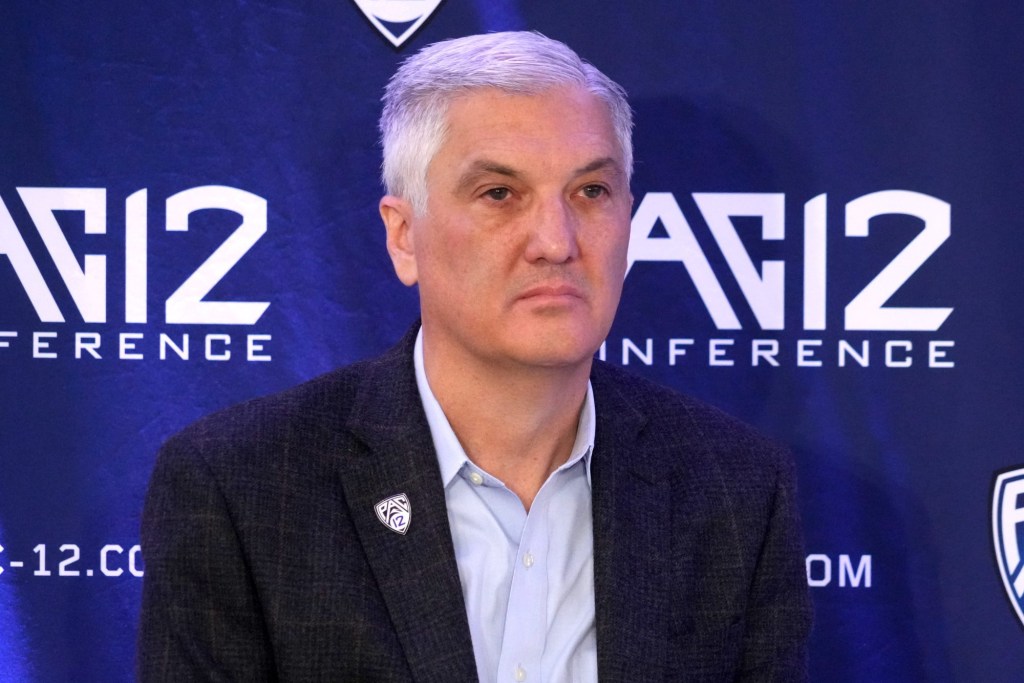
Since the news that it would lose USC and UCLA, the Pac-12 has been in negotiations over a new media package lucrative enough to keep the conference together. It was up against some major deals, but commissioner George Kliavkoff said last year he felt the conference was in an enviable position.
- In 2020, the SEC inked a 10-year, $3 billion deal with Disney.
- Last summer, the Big Ten signed the biggest media package in conference history: a mid-$7 billion deal with Fox, NBC, CBS.
- The ACC is locked into a deal with ESPN until 2036 — and while some schools, like FSU, have been vocal about wanting more money, the conference has been relatively stable.
Then, the Big 12 and commissioner Brett Yormark leapfrogged the Pac-12, inking a six-year, $2.3 billion extension with ESPN and Fox a year early, taking valuable media rights dollars — and television inventory slots — from the Pac-12.
All the while, the media rights machine funding extravagant college sports contracts turned off.
Linear networks like ESPN said they would no longer throw millions at just any product, but focus on a select few top-shelf rights (the Pac-12 wasn’t considered one). Streamers, perhaps thought to be the new cash cows of the media rights landscape, floated much more conservative offers than expected.
“This is a nasty environment right now,” an expert industry source previously told FOS.
Colorado, for its part, didn’t want to wait. It jumped to the Big 12 before the Pac-12 presented a deal. In a meeting, regents said their top reasons for moving were “stability and exposure” — or, in other words, what the Big 12’s television deal provided.
The Pac-12 was left with a reported deal predominantly coming from Apple that would pay out only a small amount in guaranteed money and bonuses based on subscriptions.
The industry source told FOS an Apple deal would “be tough on reach and distribution priorities.” And it clearly didn’t offer enough cash. Ultimately, the Pac-12’s lack of television money would cause its demise.
Oregon and Washington announced they would join the Big Ten in 2024. Both schools will receive annual payouts of $35 million-$40 million from Big Ten media partner Fox, a source told FOS. Even though the offering is much smaller than what the rest of Big Ten members will receive, it’s better than the Pac-12 deal, an Oregon official said in a Zoom meeting.
The future of the Power 5 could be a Power 4, or even a Power 3.
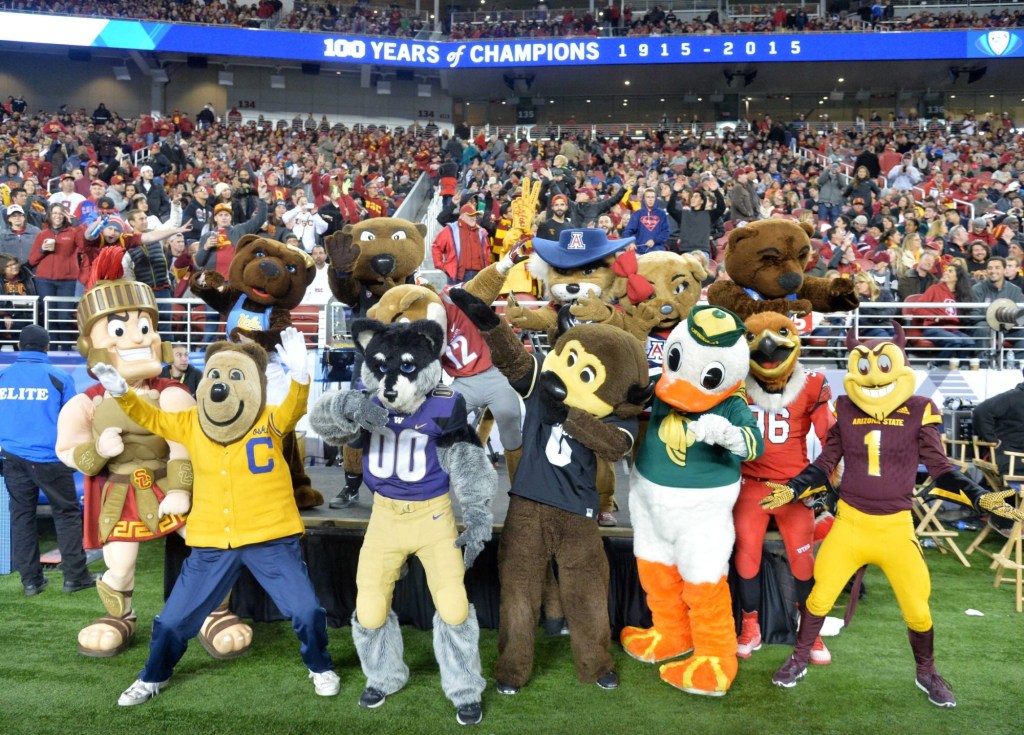
“Today’s news is incredibly disappointing for student-athletes, fans, alumni, and staff of the Pac-12 who cherish the over 100-year history, tradition and rivalries of the Conference of Champions,” the Pac-12 said in a statement. “We remain focused on securing the best possible future for each of our member universities.”
The big-time administrators, from conference commissioners to athletic directors and university presidents, have cannibalized their own business model. But most of them will still get their payday, even if in a new conference. An instructive image: one of the Oregon trustees called into the Big Ten vote from a golf course.
Meanwhile, athletes will pay the price for their administrators’ decisions.
They’ll be forced to fly cross-country in the middle of the school year, potentially playing even more games, without receiving a cut of the TV money they’re generating. Bleary-eyed athletes will have to juggle school with frequent flights and up to three time zones.
The athletes are also getting blamed for tearing down a system that college sports officials themselves are killing.
The NCAA and Power 5 conferences have continued their lobbying machine to control name, image, and likeness, minimize athlete compensation, and completely squash any future athlete collective bargaining effort. Their reasoning: These things would spell the end of college sports as we know them.
“The old question — how long would it take TV money to destroy college football? Maybe we’re here,” Washington State head coach Jake Dickert told reporters on Thursday.
Even Dickert, a Power 5 football coach who benefits financially from the current system, lamented the potential end of the Pac-12 brand and of local rivalries.
“We’ll look back on college football in 20 years and go, what are we doing?”
Download the FOS App
The business of sports, in your pocket.



Scan the QR code to get the app now.