Want more from Front Office Sports
in your search results?
Former Alabama football coach Nick Saban wanted to make something clear to the group of senators he faced Wednesday on Capitol Hill. “I really want everybody to know I’m not here to represent a conference or a team,” he said, “but to preserve college athletics as a whole.”
Saban was testifying in favor of the Protect College Sports Act, a sweeping bipartisan bill introduced last week, and wanted to underscore his stance given that his old conference, the SEC, and therefore his old school of Alabama (that’s still paying him), has come out against it.
The moment—inconceivable even a few weeks ago—was emblematic of the new reality in college sports. Before, the alliances in college sports regarding federal legislation were relatively simple. But in response to the Protect College Sports Act, a group of new and unexpected fractures has emerged: The Power 4 has split, and athlete advocacy groups are aligning with conferences they were previously opposed to. The phenomenon was on display Wednesday in Washington, D.C.
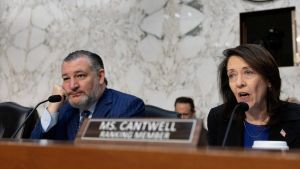
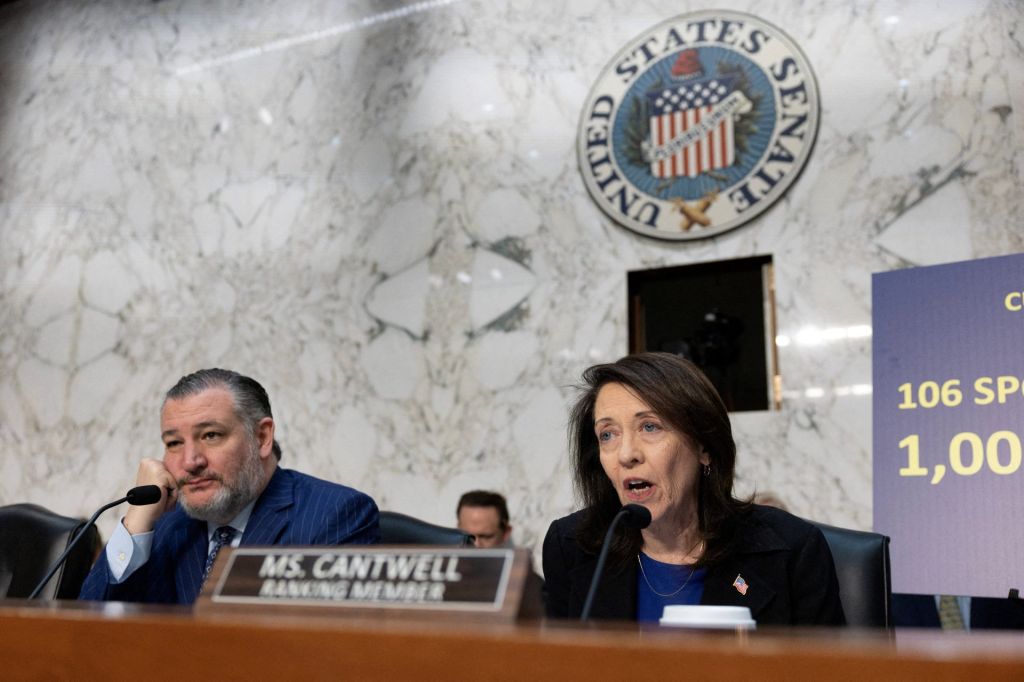
“My colleagues probably know that there are probably 25 things that Sen. Cruz and I don’t agree on, and that’s just in this committee,” Sen. Maria Cantwell (D., Wash.) said during the hearing. “So, saying that it is an accomplishment for him and I to agree on this is saying something.”
But with this bipartisan compromise, they’ll have to overcome perhaps a new set of diverging factions.
For the past six years, the NCAA and Power 5 (and then, after the Pac-12, Power 4) conferences lobbied separately, but in lockstep, for three things: a no-athlete employee clause, antitrust protections to set and enforce rules, and a preemption of state laws that would conflict with these rules. Sen. Ted Cruz (R., Texas) at one point introduced draft legislation offering all of these things.
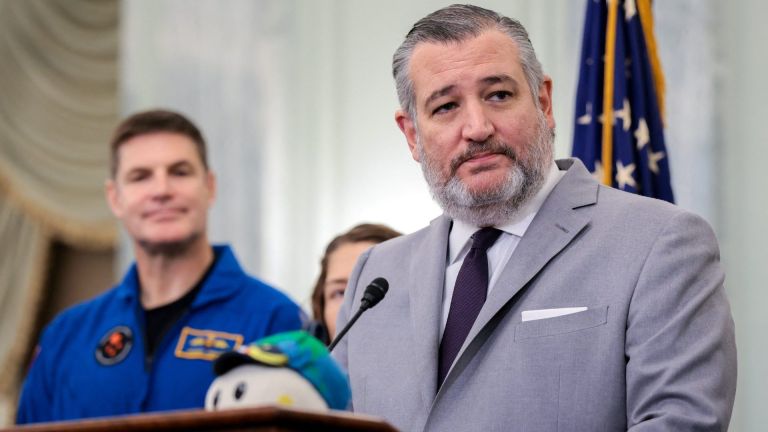
But Cruz quickly learned he would have to enter bipartisan negotiations to get anything passed. He said Wednesday he spent “hundreds, if not thousands of hours” negotiating with Democrats. The result: Sens. Cruz and Eric Schmitt (R., Mo.) have signed onto the same bill as Sens. Cantwell and Chris Coons (D., Del.).

Big 12, ACC, Other FBS Leagues in Favor
Since the Protect College Sports Act was introduced, the Big 12 and ACC have sent letters of support (as have many of their schools). They are now aligned with the American, the Pac-12 (represented by commissioner Teresa Gould at the hearing), and Conference USA, which have supported the bill as well.
Central to this coalition has been Cody Campbell, the Texas Tech board chairman and Trump adviser who has led presidential committees on college sports policy. Campbell has been a major champion of the concept of pooling media rights, a core tenet of the bill; he has also been a frequent public critic of the Big Ten and SEC.
“It seems that there is broad bipartisan agreement on the major issues, which speaks to the quality and thoughtfulness in how the bill was constructed,” Campbell told FOS after attending the hearing.
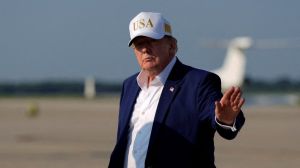
On Thursday, Trump released a formal endorsement of the bill. “University Presidents, Conference Commissioners, Student-Athletes, Coaches, and Athletic Directors have all complained to me that it has become a disaster, after years of no action, and that Schools were losing Hundreds of Millions of Dollars a year,” Trump wrote in a post on Truth Social. He said the Protect College Sports Act “resolves many of the most urgent issues challenging our universities and Student-Athletes, stops the chaos and, most importantly, it may be the last chance to save College Sports, and Colleges themselves, before it’s too late.”
Big Ten, SEC Oppose the Bill
But the bill has split up the Power 4. The Big Ten and SEC put out a joint statement Tuesday saying they could not support the bill “as written.” Their stated reasons: The bill didn’t “meaningfully” give antitrust protection or preemption of state laws, and it codified the House v. NCAA settlement in a way that “may result in fewer student-athletes receiving direct revenue-share payments.”
Those likely aren’t the only problems they see. The conferences have come out publicly against the concept of pooling and selling media rights. Plus, the bill calls out the two leagues by effectively preventing an SEC–Big Ten merger.
“I think the reason why Sen. Cruz and I have a letter from the Big 12 and the ACC is because they think [conference realignment is] going to happen to them next,” Cantwell said during the hearing. “That somebody is going to come in and rearrange the deck chairs of those conferences, steal the eyeball schools and then basically leave everybody with everything else.” Though she didn’t refer to the Big Ten and SEC by name, it was implied they would pick apart the ACC and Big 12.
There have been signs of that fracturing, of course, as the Big Ten and SEC sped ahead of everyone else on revenue: They formed the SEC-Big Ten Joint Advisory Committee and faced critiques from Campbell and others about the “Power 2.” But the fracture has never been more significant, especially as SEC administrators contemplate a “breakaway” of sorts—one where they would at least enforce their own rules, if not leave the NCAA altogether.
In another odd pairing, college athlete advocacy groups—as well as the Congressional Black Caucus—are standing alongside the Big Ten and SEC, perhaps for the first time. House minority leader and CBC member Hakeem Jeffries (D., N.Y.) said just last week: “If the SEC schools are for it, we are against it.”
Sen. Chris Murphy (D., Conn.) and Sen. Bernie Moreno (R., Ohio), a pro-Trump Republican, have both voiced opposition to the bill. Also opposed to the bill: Trump ally Steve Scalise (R., La.), the House majority leader, who told Politico he favors the House-authored SCORE Act.
This ideologically diverse group, of course, doesn’t necessarily agree with each other on why they oppose the bill. Murphy, for example, thinks the bill goes too far in controlling athletes; House Republicans say it doesn’t go far enough. Moreno has vowed not to support the bill if it doesn’t include a provision preventing transgender athletes from playing women’s sports.
Still, the fact that they’re on the same side in this situation is noteworthy in itself.
Said one industry source opposed to the bill: “If the SEC and the CBC agree your bill sucks, it really sucks.”
The NCAA is taking a more diplomatic approach. “Based on our analysis and the initial feedback from schools, we believe the bill addresses many, but not all, of the priorities student-athlete leaders and institutions have been advocating for,” NCAA president Charlie Baker wrote in a letter to schools Wednesday.
Download the FOS App
The business of sports, in your pocket.



Scan the QR code to get the app now.