This year, Cinderella’s glass slipper is designer.
For the second year in a row, the NCAA Division I men’s basketball tournament doesn’t include any traditional Cinderellas. There are no mid-majors or lower-resourced programs new to March Madness success. The phenomenon is attributed to the combination of the unrestricted transfer portal, NIL, and revenue-sharing used to help lure talented players at low- and mid-majors to more well-resourced programs.
But though more traditional Cinderella candidates like Miami (Ohio) and High Point didn’t make it to the Sweet 16, that doesn’t mean there weren’t storybook upsets.
An “underdog” 11-seed Texas knocked off No. 6 BYU and No. 3 Gonzaga; No. 9 Iowa took down defending national champion Florida. St. John’s, a five-seed out of the Big East, beat No. 4 Kansas, a blue-blood.
Cinderellas still exist in the men’s Sweet 16—they’re just much richer than the princesses of yore.
Power 4’s So-Called Underdogs
The lowest-seeded program to make the Sweet 16 is the Longhorns, for example, who have made it from the First Four to the Sweet 16. During the Round of 64, Texas bested a powerhouse No. 6 BYU program led by potential top NBA Draft pick AJ Dybantsa.
Then, in the Round of 32, the Longhorns took down No. 3 Gonzaga. It was a bizarro-world scenario in which the Zags, despite being a mid-major, had plenty of storied history in the men’s tournament and were very much favorites, while the wealthy Longhorns were the plucky underdogs.
But they can’t be considered Cinderellas given their plethora of financial resources, and many have protested labeling them underdogs at all, despite their double-digit seed.
The Longhorns are part of one of the richest conferences in all of college sports. In 2024-25, Texas boasted a men’s basketball operating budget of $22.4 million—the fourth-highest in all of men’s college basketball, according to data obtained by Extra Points. That doesn’t include revenue-sharing and NIL money.
“I don’t think we ever really want to sign up to be the Cinderella story, because we are the University of Texas,” head coach Sean Miller told reporters after beating Gonzaga. “And, look, we represent the SEC as well.”
The other rich conference, the Big Ten, has an underdog of its own in the Sweet 16. On Sunday night, No. 9 Iowa beat No. 1 Florida with a three-pointer in the final seconds of regulation for a 73-72 win.
The Hawkeyes rank 33rd in college basketball with their 2024-25 men’s basketball budget of $13.3 million, per Extra Points.
It’s unclear how much the Hawkeyes or the Longhorns spent on their men’s basketball roster through NIL/revenue-sharing, but it is believed to be in the general range of what it takes to be successful in the power conferences: $8 million to $10 million, minimum.
“I think that parity is great for the game, but things change,” Arizona coach Tommy Lloyd said on no mid-majors being in the Sweet 16. “I think once finances become part of it, there’s gonna be a breaking point for some of the lesser programs that just don’t have the finances. And that’s just an obvious statement.”
Denis Poroy-Imagn Images
Beast of the East?
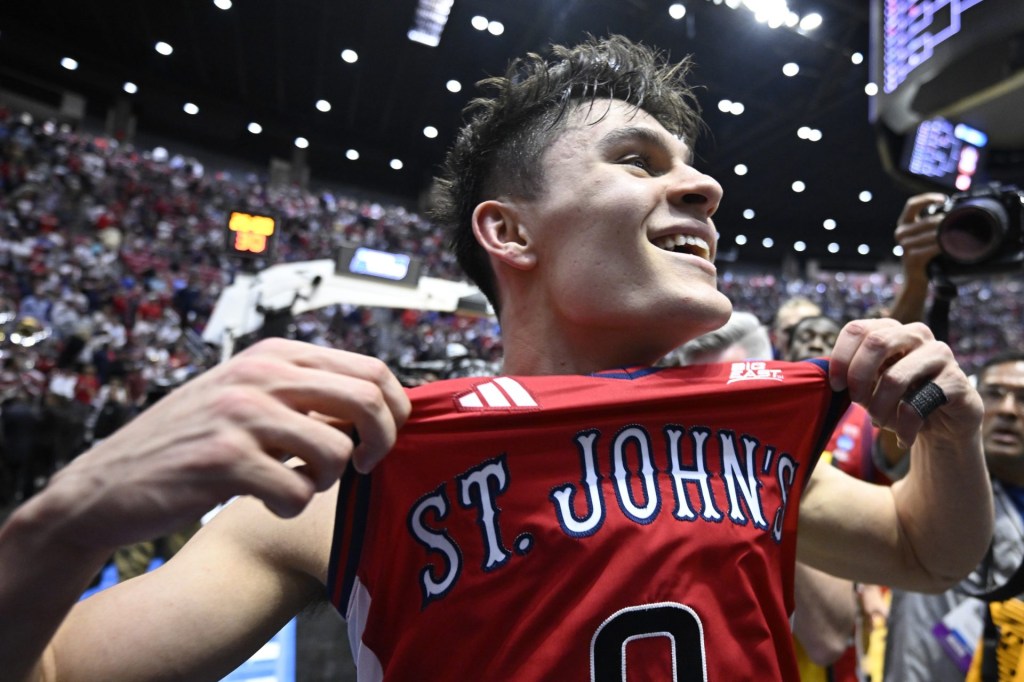
On Sunday, No. 5 St. John’s knocked out Bill Self’s storied Kansas program with a buzzer-beater. The Red Storm are experiencing a resurrection of sorts; led by Rick Pitino, the Red Storm have secured their first Sweet 16 berth since 1999. While St. John’s is a member of the Big East, a much less wealthy conference than those of the Power 4, its storied basketball history is widely considered an additional power conference in men’s basketball.
St. John’s men’s basketball budget isn’t publicly available, but its NIL and revenue-sharing is renowned for being among the highest in the Big East at about $10 million. The Red Storm are backed by billionaire alum Mike Repole, a benefactor often referred to as a “co-owner” of the program who has now engaged in multiple campaigns to match donations to the program.
Or maybe, in this new era of college sports, it’s time to retire the nicknames altogether.
“I think we’re all adults here in this room,” Gonzaga coach Mark Few said after falling to Texas. “Some of these monikers we put on everybody from Cinderella to blue bloods and all that, I have a hell of a time understanding it. I mean, they make literally no sense.”
SPONSORED BY INVESCO QQQ
Innovation On and Off the Court
Rethink how you round up the GOATs of the Nasdaq-100 Index®. With Invesco QQQ ETF, you can harness the growth potential of groundbreaking companies across sectors including tech, healthcare, and more. An investment in Invesco QQQ is an investment in innovation. Access the future with Invesco QQQ.
“Kalshi has repeatedly stated that its operations are legal in 50 states, which is clearly not true.”
—Mike Dreitzer, chairman of the Nevada Gaming Control Board, said in a statement after a judge ordered Kalshi to halt sports event contracts in the state. A Nevada judge has temporarily blocked Kalshi from offering sports prediction markets in the state, the latest development in a growing fight over the space.
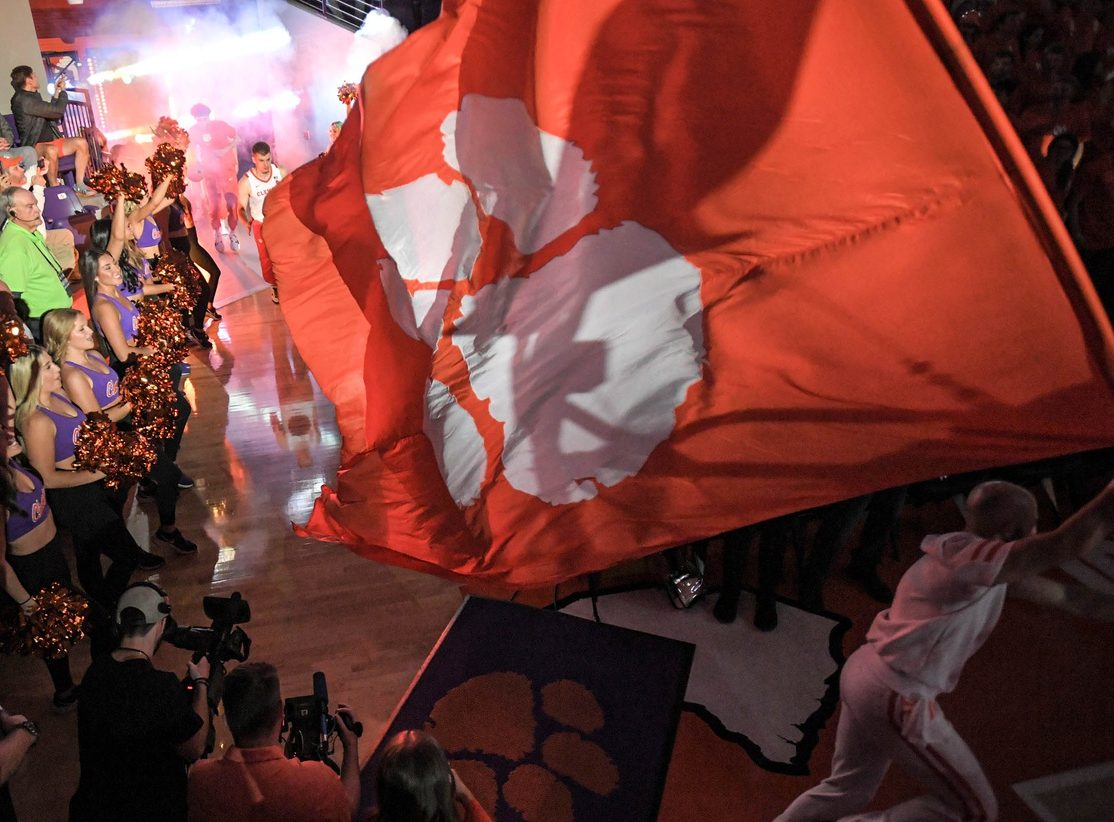
That’s how many hours of content Clemson University’s in-house media arm, Clemson Ventures, has produced in less than two years as it builds out its own content business.
Clemson is part of a growing shift in college sports, with schools creating shows and behind-the-scenes content they can actually sell. One recent deal brought in several million dollars in ad revenue for Clemson Ventures, and the program also makes money by producing content for athletes’ NIL deals. Read the story.
Friday’s result: 90% of respondents think NIL enforcement should be stricter.
DISCLAIMER
*NOT FDIC INSURED | MAY LOSE VALUE | NO BANK GUARANTEE
There are risks involved with investing in ETFs, including possible loss of money. ETFs are subject to risks similar to those of stocks. Investments focus on a particular sector such as technology, are subject to greater risks, and are more greatly impacted by market volatility than more diversified investments. The Fund is non-diversified and may experience greater volatility than a more diversified investment. The risks of investing in securities of foreign issuers can include fluctuations in foreign currencies, political and economic instability, and foreign taxation issues.
The Nasdaq-100 Index® includes the 100 largest non-financial companies listed on the Nasdaq. An investment cannot be made directly into an index.
This does not constitute a recommendation of any investment strategy or product for a particular investor. Investors should consult a financial professional before making any investment decisions.
Before investing, consider the Fund’s investment objectives, risks, charges, and expenses. Visit invesco.com for a prospectus with this information. Read it carefully before investing.