Want more from Front Office Sports
in your search results?
In 2021, the beginning of the NIL (name, image, and likeness) era brought the most dramatic change to the business of college sports—that is, until this year.
Federal judge Claudia Wilken approved the House v. NCAA settlement in June, which allowed schools to directly pay college athletes for the first time in NCAA history and began the “revenue-sharing era.”
Thanks to the settlement, all Division I schools can now pay a total of up to $20.5 million to players across the athletic department—a number that will increase every year. Power-conference programs are required to participate in rev-share in some capacity, while the rest of D-I schools were given the choice to opt in.
In addition, players can still earn NIL deals set up through the athletic department, groups of boosters and donors called NIL collectives, or outside companies—though the deals have to offer fair-market value for NIL activities, and not be pay-for-play in disguise. The power conferences set up a new entity to oversee enforcement of these new rules called the College Sports Commission. (The settlement’s other provisions include eliminating scholarships and implementing roster limits instead.)
The NCAA and power conferences billed the settlement as both a major step forward for athletes rights, as well as a way to set guardrails for athlete payments. It was meant to ease the chaos of “unrestricted free agency” created by unregulated NIL and unlimited transfers.
Instead, the settlement has only raised the floor for what players expect schools to pay them, and the new NIL system has not yielded regulatory results.
The Rev-Share Era
In 2020, former Arizona State swimmer Grant House and others filed a lawsuit against the NCAA, Big Ten, SEC, Pac-12, ACC, and Big 12 in the Northern District of California. The plaintiffs argued athletes who didn’t receive NIL money before the NCAA changed its rules in 2021 deserved to be compensated. And, going forward, they wanted to force the NCAA to classify broadcast revenue as a form of NIL—the argument that would eventually lead to schools offering revenue-sharing.
The settlement, which offered $2.8 billion in back-damages to former athletes and created the new system of revenue-sharing, received preliminary approval in October 2024.
To prepare, schools began hiring GMs for roster cap management. Some folded their NIL collectives into their athletic departments in anticipation of new NIL rules. They began drawing up revenue-sharing contracts and offering deals to players contingent on the settlement’s approval. They also began new fundraising campaigns for the extra revenue they’d need to pay players.
At the FBS level, most schools planned to share between 70% and 75% of revenue with football rosters alone. Many only offered revenue-sharing to a few of their programs, like football, men’s and women’s basketball, and one or two popular Olympic sports. They also increased scholarships—one of the acceptable new forms of payment in the post-House era. In all, 310 schools opted into the revenue-sharing terms for the 2025-26 season.
Getting Around the Cap
The settlement didn’t get final approval until June 6, leaving schools just a month to prepare for the rev-share era to officially begin on July 1.
As a result, this year’s football season—and basketball season—don’t quite reflect the revenue-sharing era, however. Instead, they reflect the “frontloaded roster era.”
The new House settlement NIL rules would require all players across Division I to submit every NIL deal over $600 into a portal called NIL Go for review, with the new College Sports Commission overseeing deals. But schools and collectives knew this new system wouldn’t be implemented until the settlement was approved—so they sprung into action to avoid the cap.
During this past offseason, schools and collectives offered huge NIL “pay-for-play” deals and paid them out before the new rules were implemented so that they wouldn’t be subject to scrutiny. Players wouldn’t have to report any deals that were signed before June 11 (when NIL Go opened) and that were paid in full before July 1.
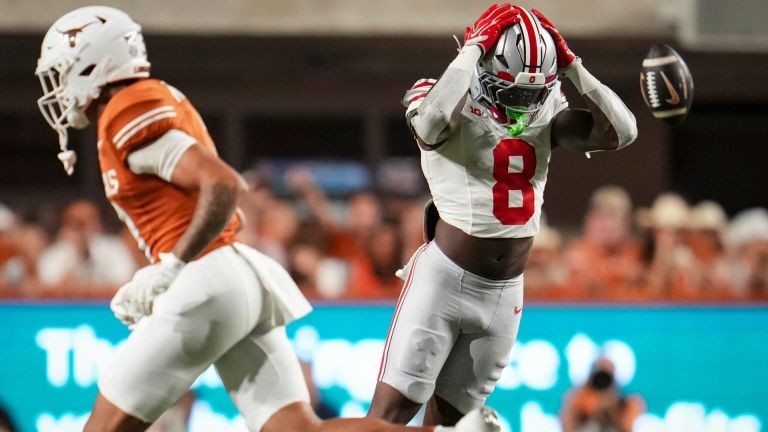
The result: Top college football rosters, like Ohio State—worth tens of millions of dollars— despite the revenue-sharing cap at $20.5 million for an entire athletic department.
The cost of football (and basketball) rosters may not decline next year, either. Collectives can offer their own deals, so long as they are tied to players offering services in exchange for compensation (like going to events or signing autographs).
Meanwhile, rule enforcement still appears nebulous at best. The CSC, run by former MLB executive Bryan Seeley, went through six months of turmoil after its June launch due to a lack of clarity around which types of NIL deals would be allowed under the new settlement rules. Though those issues have been resolved, the CSC doesn’t have much enforcement power given that power conference schools still haven’t signed the participant agreements that would protect the CSC from litigation. And some NIL collectives have already given up on reporting deals through the system altogether.
In the first year of the House settlement taking effect, players are earning millions more than they ever have. But schools have not gotten the stability they say they need.
Download the FOS App
The business of sports, in your pocket.



Scan the QR code to get the app now.