Want more from Front Office Sports
in your search results?
Athlete advocacy organization Athletes.org (AO), has proposed what is believed to be the first draft of a collective bargaining agreement that could be used in college sports.
The organization, which has about 5,000 current and former college athletes as members across multiple sports, says it could be a solution to the instability in college sports caused by lawsuits targeting rules regarding player compensation, eligibility, transfers, and more.
The proposal faces major roadblocks, however. So far, the NCAA and big-time conferences have fought against the concept of collective bargaining, because it would require athletes to be employees. And if they enter into a CBA without employment status, there’s a question of how enforceable the agreement would be.
But a growing number of administrators—and a new group endorsing this CBA specifically, including power conference administrators—have begun to voice their support. And the industry is desperate for answers.
“Everyone knows the current model of college sports is a ticking time bomb,” Brandon Copeland, former NFL player and co-founder of AO, said in a statement. “While some still hope Congress will bail out a repeat antitrust offender, we’re focused on creating the one solution that actually works: bringing athletes to the table as real partners with a real say in their future.”
Collective bargaining has been discussed across the industry in recent years, ever since the Supreme Court ruled in Alston v. NCAA that NCAA rules were subject to antitrust scrutiny—and many of its rules have been challenged in court as a result. Collective bargaining is common in pro leagues, because they allow leagues to regulate player and coach compensation and set player movement restrictions.
The AO collective bargaining agreement was created after two years of meetings with athletic directors, conference commissioners, team general managers, and coaches. In August, the group brought 24 team general managers together; they all agreed collective bargaining was the best solution, an AO spokesperson told FOS. The spokesperson described many of these meetings as “private,” because “many remain hesitant to discuss it publicly out of fear of retribution.”
The CBA, shared with FOS, outlines about a dozen terms that could be negotiated between players (represented by AO) and a league, including sports-specific terms. Regarding pay, the negotiations could cover NIL use, group licensing rights, revenue-sharing, salary caps, bonus eligibility, and anti-salary cap circumvention mechanisms.
In this new structure, teams in each sport would agree to a minimum “salary” for players that would include tuition up to the cost of living. Some sports may also agree to add additional cash benefits to that floor. Then, a cap would be negotiated. In addition, the College Sports Commission’s mechanism for reviewing NIL deals to ensure they are fair-market value rather than pay-for-play would be eliminated and replaced with a cap circumvention mechanism, as is the case in the pros.
The agreement stipulates players could negotiate transfer portal windows and rules, as well as eligibility concerns—which, like player compensation, have been challenged in courts. Finally, it suggests negotiating standards for sports betting policies and health insurance.
But several factors suggest that implementation of a CBA for college athletes would be particularly challenging.
First: Who would players negotiate with? The NCAA has given up on enforcing athlete compensation rules violations, and has given the power to enforce revenue-sharing and NIL to the new College Sports Commission, funded by the power conferences. It’s unclear whether players would negotiate with schools specifically, conferences, the NCAA, the CSC, or another group. AO suggested a new enforcement entity to represent “institutions that agree to collectively bargain with their athletes.”
There are also major questions regarding whether a CBA would have teeth given that players aren’t deemed employees. The AO spokesperson acknowledged that, if athletes aren’t employees and the CBA isn’t a formal union, players wouldn’t have certain protections afforded by U.S. labor law. However, she said that the CBA could be enforceable “like any other contract.”
And then there’s the question of whether schools, conferences, the NCAA, or the College Sports Commission would agree to bargain at all.
The NCAA and major conferences have so far eschewed the concept of a CBA in college sports because unionization requires college athletes to be employees—and that’s something they can’t get behind. Instead, the governing body and top power conferences have asked Congress to pass a law granting it antitrust protections. In other words, legalizing the NCAA’s business model without having to negotiate with players as is the case in the pros.
However, many college administrators appear to be warming up to the idea of a CBA.
Some have come out in favor of collective bargaining, including UNC’s athletic director Bubba Cunningham and Tennessee’s AD Danny White; coaches like former Michigan coach Jim Harbaugh have previously come out in favor.
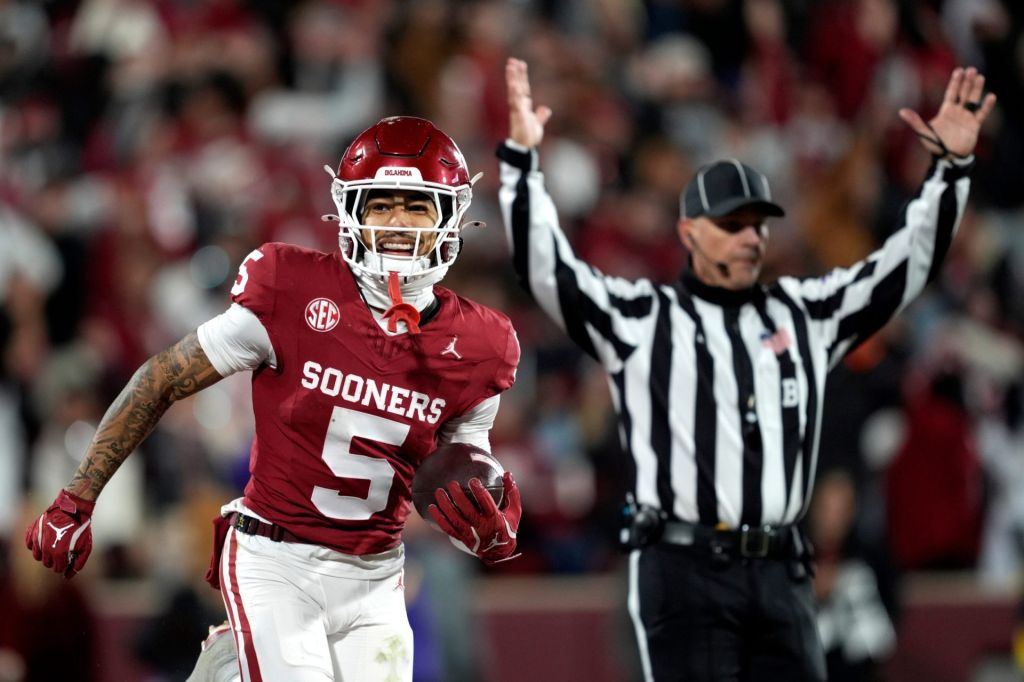
Oklahoma AD Joe Castiglione said, as part of AO’s prepared statement: “AO’s CBA draft may not be perfect today, but it’s one of the first concrete blueprints I’ve seen which integrates the athlete’s side of this paradigm shift.”
Download the FOS App
The business of sports, in your pocket.



Scan the QR code to get the app now.