The College Sports Commission—the new entity launched in June to enforce the rules from the House v. NCAA settlement including revenue-sharing caps, roster limits, and new NIL restrictions—is facing mounting opposition to its school participation agreement that the power-conference offices had agreed to Wednesday.
At least two schools are considering not signing the agreement, sources told Front Office Sports Friday.
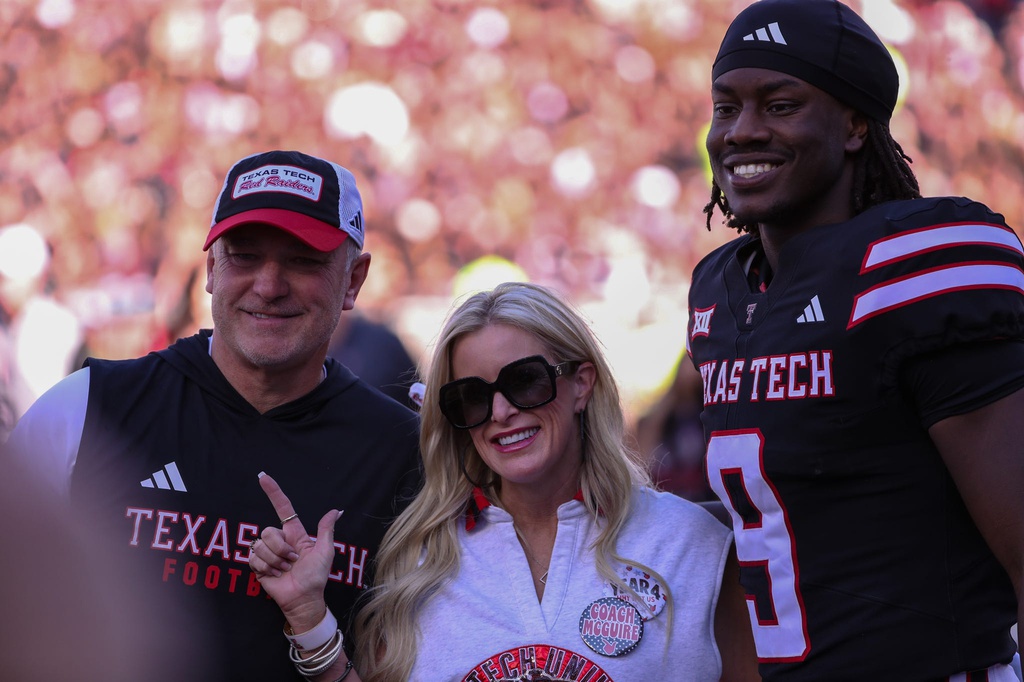
One of them is Texas Tech. On Saturday, Texas Tech University System general counsel Eric Bentley distributed a document outlining potential legal issues with the CSC agreement and advising the university not to sign. It has been shared widely across the Big 12.
There is a second school in a different power conference, a power-conference administrator told FOS on condition of not naming the school.
The developments are significant in that the CSC participant agreement—which binds schools to the terms of the House v. NCAA settlement, the CSC’s enforcement operations, and waives some of their rights to sue—is only valid if all power conference schools sign. It is unclear if the CSC would have teeth without schools signing this agreement.
Power-conference schools received copies of the participant agreement on Wednesday. Schools were given two weeks to sign by December 3. Once all power conference schools sign, the document would be distributed to the rest of Division I schools who opted into the House v. NCAA settlement.
The 11-page participant agreement says that all schools will abide by the rules set by the CSC, cooperate with investigations into potential rules violations, and waive their right to sue the CSC for issues regarding these rules or regarding requisite investigations, according to a copy obtained by FOS.
The agreement also attempts to hold schools accountable for the actions of their athletes and “associated entities” like NIL collectives. It also states that schools could face postseason bans or loss of conference revenue distributions if they ask associated entities or even state attorneys general to sue on their behalf.
Conferences agreed to terms “in principle” on Friday. But now schools may be balking at the terms.
“There are numerous provisions of the CSC Participant Agreement that we should not agree to,” the Texas Tech system general counsel’s memo reads.
The memo enumerates 16 concerns, including that multiple sections of the CSC agreement are “an overreach on enforcement,” and that Texas Tech may not be able to follow through on certain punishments for university officials as required by the CSC.
It also brings up potential conflicts between the CSC memo and Texas state laws. For example: “As a Texas State Entity, we cannot agree to binding arbitration.” (The CSC memo does include language that addresses potential conflicts with state laws.)
Another concern outlined by Bentley: whether the university could be penalized if Texas’s attorney general were to bring action against the CSC. “If our Attorney General files any lawsuit related to the CSC, the University may lose all Conference revenue and post-season eligibility,” the memo notes. “This clause attempts to penalize the University for appropriate actions taken by the Attorney General to protect state agencies and its citizens, which is obviously unacceptable.”
The memo concludes that while Texas Tech “will continue to comply with the revenue distribution rules as provided in the House settlement, the University should not be forced into signing the CSC Participant Agreement with one-sided provisions that are unworkable and/or violate state law. Moreover, the Board possesses the fiduciary responsibility to ensure the University does not sign an Agreement with such blatantly overreaching and one-sided provisions.”
In addition to advising Texas Tech against signing, the memo says that it is the opinion of the general counsel that the document cannot be signed without full Texas Tech board approval. If that ends up being the case, the CSC and conference commissioners may have to corral hundreds of university board members in addition to athletic directors.
University officials across the Big 12 have been sent the memo and are considering its merits, a source told FOS.
The administrator source from the other school’s conference told FOS that schools “had very little involvement on the rules” and that the two-week timeline to sign the agreement seemed “hasty.”
The source said schools were able to comment on an earlier version of the agreement, but that this one included multiple provisions they had not previously seen. (Power conference offices were the ones who finalized the agreement with the CSC before it was sent to schools.)
Another source had previously told FOS that the CSC and conferences gave all power conference schools the opportunity to give feedback on the agreement before it was finalized and sent out.
In response to a request for comment, a CSC spokesperson told FOS, “The University Participant Agreement formalizes each school’s decision to participate in the new system established by the House settlement. Each of these institutions has already proactively chosen to participate in the new system – either by opting in to revenue sharing or agreeing to the House settlement. Signing the participant agreement is a logical next step in building a sustainable enforcement system and will allow the College Sports Commission to effectively deliver on what was agreed to in the settlement.”